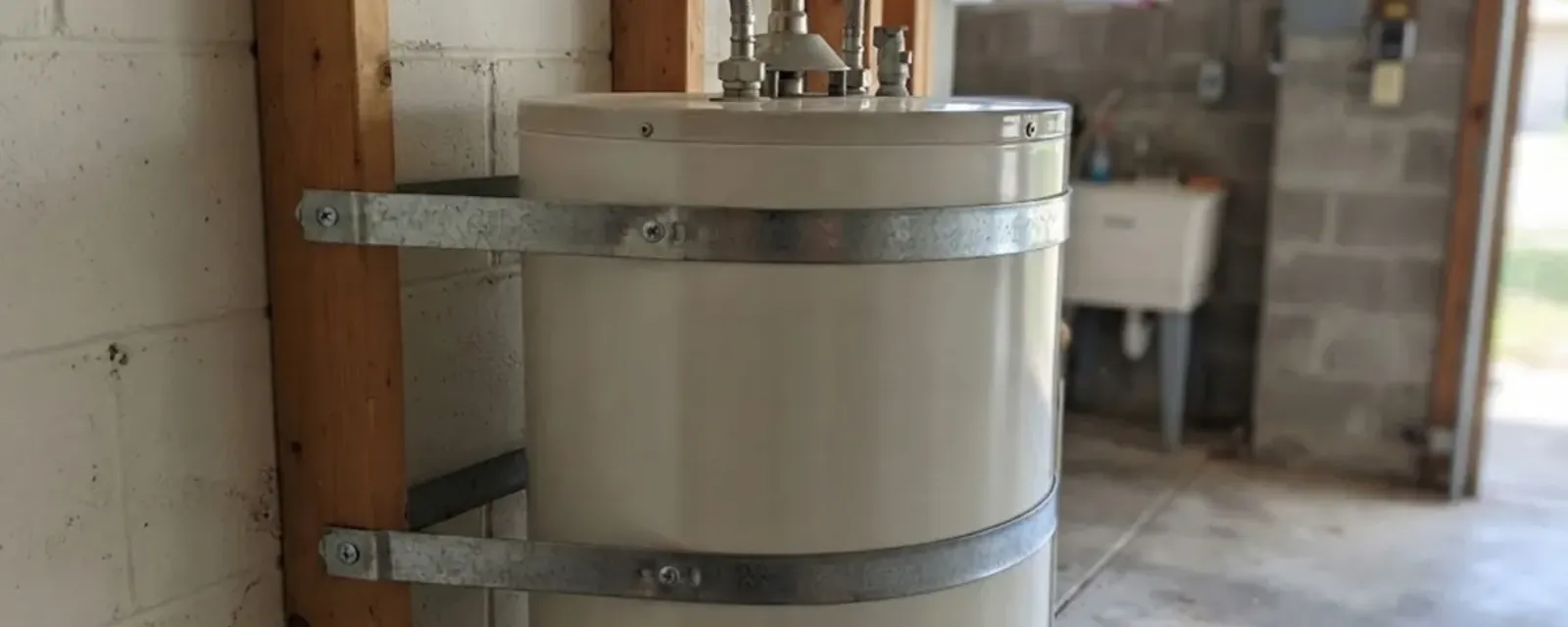
What a proper installation includes
A water heater is a pressure vessel that holds a lot of stored energy. Installing one correctly means a temperature and pressure relief valve piped to a safe termination, a drain pan where a leak would damage finished space, a shutoff valve on the cold inlet and a vent that carries combustion gases out of the house.
On a gas or oil unit, the vent diameter, the pitch of horizontal runs and the clearance to combustibles all matter. A vent that slopes the wrong way or leaks combustion products is a carbon monoxide risk. We also ask about combustion air, because a tight basement or closet can starve a burner.
The 2022 Connecticut State Building Code adopts the 2021 International Plumbing Code (IPC), which covers relief valve discharge piping, and the manufacturer's manual adds its own requirements.
Where municipal or well pressure runs high, a thermal expansion tank absorbs the volume increase as water heats. Without one, repeated pressure spikes can weep the relief valve or shorten the heater's life.
Which type of water heater fits your home
Each type has strengths. The right one depends on fuel, space, household size and budget.
| Type | Good fit when | Watch for |
|---|---|---|
| Standard tank, gas or oil | Existing fuel and flue are in good condition | Venting condition, tank age, standby heat loss |
| Standard tank, electric | No gas or oil line, or an all-electric home | Slower recovery, circuit capacity |
| Tankless, gas | High hot-water demand, limited floor space | Gas line size, vent routing, condensate |
| Tankless, electric | Small households, no gas available | Heavy electrical load on the panel |
| Heat pump water heater | Electric homes aiming for lower operating cost | Space and airflow, cooler air around the unit |
Heat pump models may qualify for rebates that change from year to year. Ask your electric provider and the state energy programs before you buy.
Questions we ask before we quote
These details let us bring the right parts the first time.
- What fuel does the current heater use? Oil, propane, natural gas and electric each need different installation parts.
- Where is it, and how is it vented? Basement, closet, garage or utility room, and the path of the flue.
- How many people and bathrooms? Peak demand decides tank size or tankless capacity.
- How old is the plumbing around it? Old valves, corroded nipples and seized unions turn a simple swap into a longer job.
- Is there a floor drain or drain pan? A leak should have somewhere to go besides your floor.
Installations on the Connecticut shoreline
Guilford sits on Long Island Sound, and a heater in a low basement, closet or crawlspace on the shoreline can sit in flood-prone ground. Raising it off the floor can be part of a good plan. We do not guess at flood zone status, so look up your property on the FEMA flood map, and ask the town floodplain manager what rules apply to your address.
Homes with oil heat often tie the water heater to the boiler through an indirect tank. If you are replacing a boiler as well, plan both together. Our boiler repair page covers problems on that side.
What changes the cost of a water heater installation
Replacing a heater is not one price for every house, so the quote follows these items and is clear before work starts.
- Unit type and size.Capacity and efficiency drive the equipment cost.
- Venting work.Reusing a sound flue is cheaper than building a new one.
- Code upgrades.Expansion tanks, drain pans, and a proper relief valve line are required for safe operation.
- Access.A heater in a tight attic or tall basement stair costs more to move.
- Permits.Permit rules vary, so we ask the Guilford building department what applies to your project.
Replacement because of a sudden failure is the focus of our emergency replacement service. Installation as a planned upgrade is often not covered by insurance. For a real number, call the 24/7 line and say whether you want a quote or an appointment.
After the install
We test the pressure, check for leaks, confirm that gas appliances light and vent properly and show you where the shutoff valves and the relief valve are. Keep the manual and the model and serial numbers. If you use our tankless water heater service later for flushing, those records help.
Ready to plan an installation?
Call the line any day. During business hours we schedule the visit. If you have no hot water right now, tell the dispatcher so the call is treated as an emergency.
Questions we hear on calls
A straightforward tank-for-tank swap is often done in a few hours. Changing fuel, moving the unit or adding a vent takes longer. We estimate on the call.
The Guilford Building Department takes applications online and lists plumbing and mechanical work as separate permit types. A licensed plumber handles the paperwork for an installation.
A heater near the end of its life can leak, and the damage is often bigger than the repair would have been. If yours is old, noisy, rusty or leaking, plan a replacement.
Often, yes. Moving a gas or oil unit means new venting and possibly new fuel lines, so it is quoted as a larger project.
It absorbs the pressure that builds when heated water has nowhere to go. Many homes need one, especially where a pressure-reducing valve or backflow device keeps the water from flowing back.
Yes. They suit certain homes. Space, airflow and electrical capacity decide whether one fits.
Yes. Removal of the old unit is part of a standard installation visit.
Sources for the local details on this page
The local facts above come from the Guilford Building Department permit page and 2022 Connecticut State Building Code. Rules and figures can change, so check with the town or state office before you rely on them for a permit or a purchase.