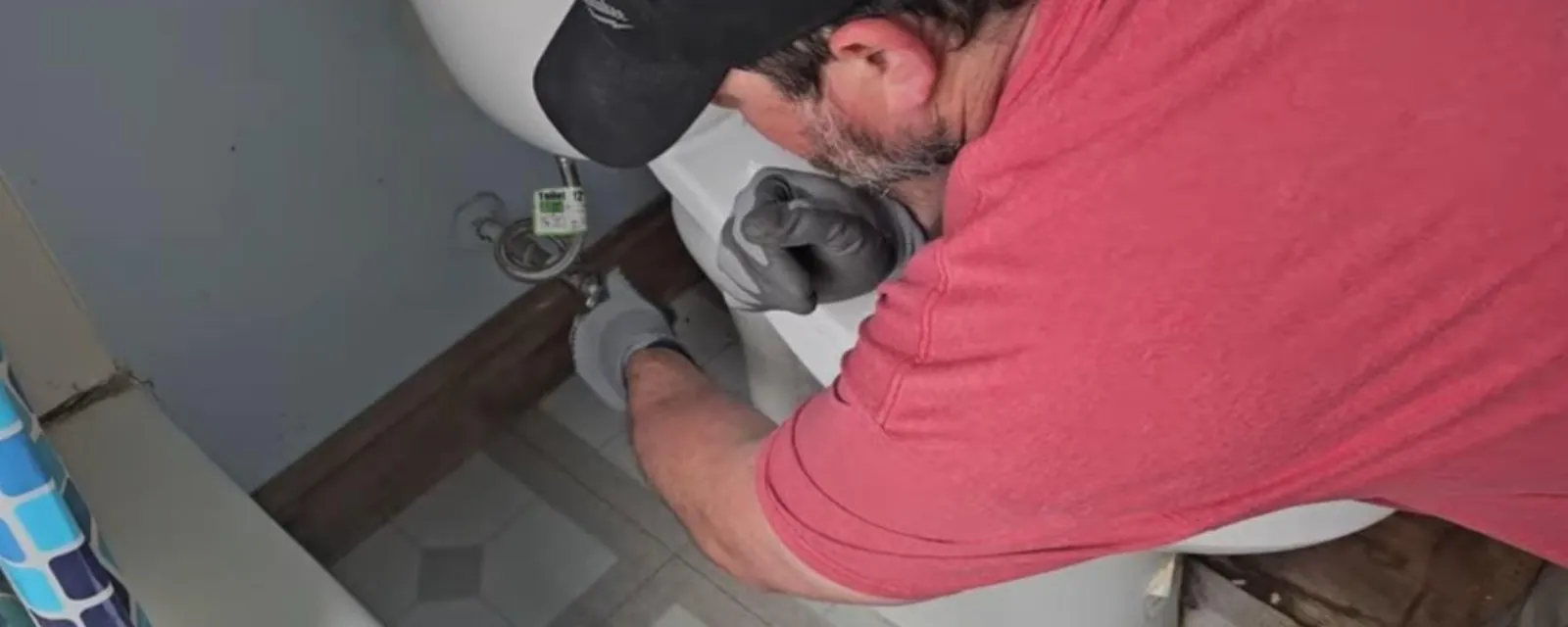
When a toilet is an emergency and when it can wait
Water that is still rising is the line between urgent and routine. If the bowl is filling toward the rim, turn the small oval handle on the supply valve behind the toilet clockwise until it stops. If the valve is stuck or the water keeps coming, shut off the main water valve for the house and call right away.
A toilet that rocks, weeps a little at the base or runs for a few seconds every hour is worth fixing soon but rarely needs a midnight visit. Water that reaches the ceiling below, soaks a finished floor or carries sewage is a same-night call, because wet subfloors and drywall start to break down within a day or two.
Two things every household should know in advance: where the supply valve behind each toilet is, and where the main water shutoff sits.
Guilford homes range from town-center houses with very old plumbing to newer subdivisions, so the valves are not always where you expect them.
Toilet problems we diagnose most
These are the situations that start most toilet calls. Each one has a different cause, which is why the first question on the phone is always what you see and hear.
- Water on the floor around the base. Usually a failed wax ring or a loose closet bolt. A toilet that has been leaking at the base for a while can soften the subfloor underneath, so it should not be left for months.
- Running or refilling on its own. A flapper that no longer seals, a fill valve that will not shut off, or a chain set too tight. The meter on your water bill is what makes this one expensive.
- Weak flush or repeated clogs. Mineral buildup in the rim jets, a partial blockage deeper in the line, or a vent problem that makes the drain gurgle. A toilet that clogs every few days points past the bowl.
- Rocking, loose seat on the floor. The toilet is no longer held firmly on its flange. Tightening the bolts is not a fix if the flange is cracked or the floor is soft.
- Leak from the tank or supply line. Condensation, a cracked tank, a failed tank-to-bowl gasket or a corroded supply line. A braided supply line that has been in place for many years is a cheap part that can cause an expensive flood.
Repair or replace: how to decide
The age and condition of the toilet matter as much as the symptom. This table is the starting point we use on a call.
| What you see | Most likely cause | Usual direction |
|---|---|---|
| Runs every few minutes | Worn flapper or fill valve | Repair, parts are inexpensive |
| Leaks at the base | Failed wax ring or cracked flange | Reset the toilet, repair the flange |
| Hairline crack in the bowl or tank | Porcelain failure | Replace the toilet |
| Clogs weekly | Blockage past the trap or a venting problem | Drain work first, then reassess |
| Old high-flow model, constant repairs | Parts no longer match, wasteful design | Replace with a modern efficient model |
This is a decision aid, not a diagnosis. The actual cause is confirmed with the toilet in front of the plumber.
Wax rings, flanges and what lies under the floor
Most leaks at the base of a toilet trace back to the seal between the bowl and the drain. The wax ring sits on top of the closet flange, which is the ring screwed to the floor. If the flange is broken or sits too low, a new wax ring will not hold and the leak will return.
Guilford has an older housing stock in the town center, where the National Register historic district dates to the 1600s and roughly four in ten buildings in that district predate 1900, according to the National Park Service nomination. Older bathrooms can hide cast iron or lead-era pipe, tile laid over old boards, and flanges that were never set to current heights. When a toilet comes up, we check the floor before we put it back.
The shoreline colonies at Shell Beach, Indian Cove and Leete's Island began as summer cottage communities, per the Guilford Preservation Alliance. Cottages converted for year-round living can have bathrooms squeezed into old framing, which makes a soft floor around the toilet more likely to turn up. Fixing the wood first is cheaper than resetting a toilet twice.
What changes the price of toilet work
Toilet jobs range from a ten-minute flapper swap to a reset over a rotted floor. These details place yours on that range, and you get a clear price before work starts.
- The cause.Replacing a flapper or fill valve is a small job. A rotted subfloor or broken flange is a larger one.
- The toilet itself.A standard two-piece toilet costs far less than a wall-hung or comfort-height model with special fittings.
- Access.A toilet on the second floor over finished plaster is harder to work around than one in a first-floor bath.
- Time of day.After-hours calls need a plumber to leave home or a bed, which is reflected in the price quoted up front.
- Connected drain work.If the clog is deeper than the trap, drain work is quoted separately.
Homeowners insurance usually covers sudden water damage from an overflow or supply line failure but not slow leaks or wear. Document the damage with photos before cleanup, and ask your insurer about your own policy. Want your real number? Call the 24/7 line and describe what you see.
Toilet installation and replacement
Replacing a toilet is a straightforward job when the rough-in distance, the flange and the supply valve all match. The rough-in is the distance from the finished wall to the center of the drain, and the usual measurements are 10, 12 or 14 inches. Buying a toilet that does not match is the most common reason a replacement stalls halfway.
A good installation includes a new wax ring or an approved seal, a new braided supply line, a fresh shutoff valve if the old one will not close, and a test of the full fill and flush before we leave.
If you are also upgrading other fixtures, our plumbing installation service covers bathroom rough-ins, and if the toilet was only the first clue, faucet and valve repair is a natural next job to check while a plumber is in the house.
While you wait for the plumber
These steps protect the floor and make the visit faster.
Stop the water
Close the supply valve behind the toilet. If it will not turn, shut the main water valve.
Do not flush
Even a partial flush can push more water to the floor if the drain is blocked.
Keep power away from water
Unplug anything near the wet area and do not use extension cords on a wet floor.
Photograph the damage
Take dated photos before you mop up. They help with an insurance claim.
Toilet overflowing or leaking now?
Call the 24/7 line and tell the dispatcher what you see. We aim to get a plumber on the way the same day wherever we can. A drain that backs up to more than one fixture is a sewer line issue, and our sewer line cleaning team handles that.
Questions we hear on calls
Yes. The line is staffed 24/7, and an overflowing toilet, a burst supply line or a leak into a ceiling is treated as an emergency at any hour. Appointment times depend on how many emergencies are open, so we say honestly what we can do when you call.
Usually the flapper at the bottom of the tank no longer seals, so water slips into the bowl and the fill valve tops the tank up again. It is a small repair, but it wastes water around the clock and shows up on the next bill.
Often, when the rough-in size matches and the flange is sound. We confirm the toilet model and the floor condition on the call, then plan the visit around that.
Sometimes. If tightening does not stop it, the flange may be damaged or the floor soft. We check both before resetting the toilet so the leak does not come back.
A blockage past the trap, a venting issue or a main line problem can all cause repeat clogs. If more than one drain in the house is slow, call about the main line rather than snaking a single toilet.
Yes. A wax ring or new seal, a braided supply line and a shutoff valve are standard parts of a proper reset or replacement.
A dispatcher can send a plumber to the shoreline towns east and west of Guilford and to North Branford inland. The service area page describes each town.
Sources for the local details on this page
The local facts above come from the National Park Service nomination for the Guilford town center district and 2022 Connecticut State Building Code. Rules and figures can change, so check with the town or state office before you rely on them for a permit or a purchase.