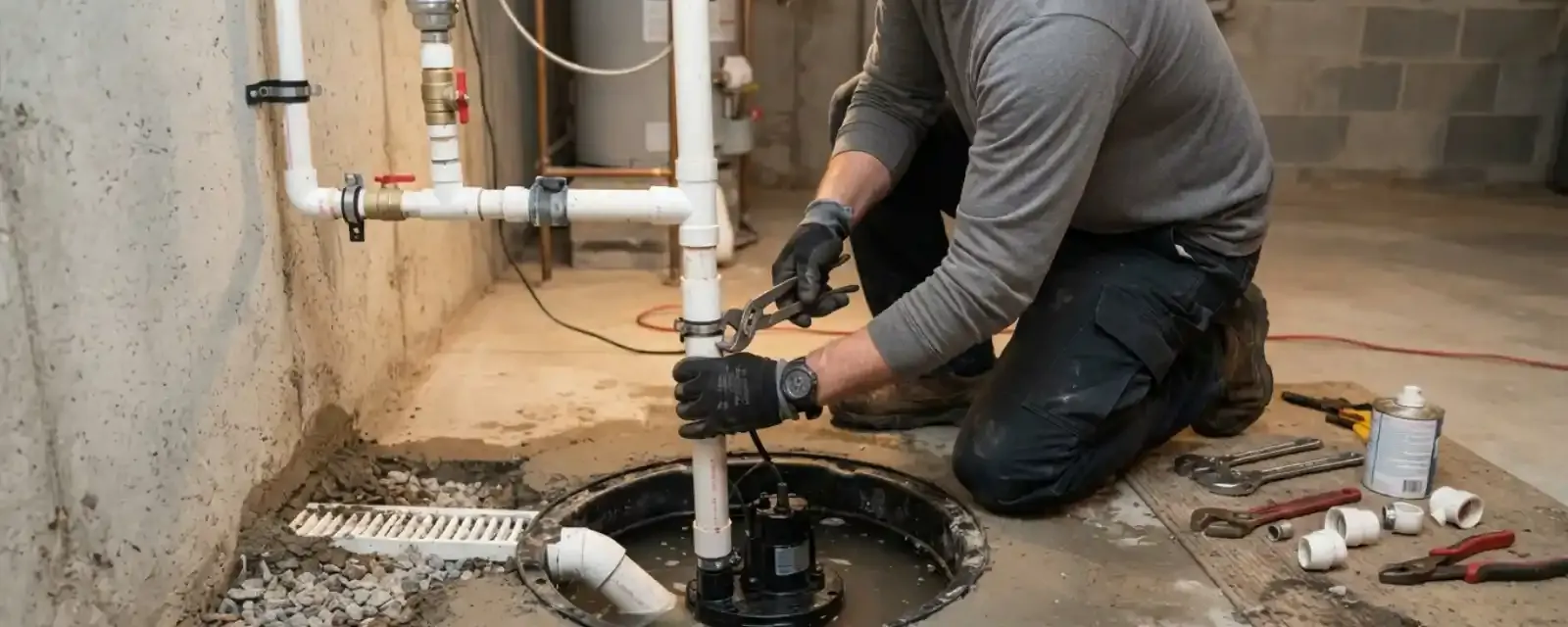
How a sump system works, and where it fails
A sump pit is a basin set into the basement floor that collects groundwater from perimeter drains. A float switch turns the pump on when the water reaches a set level, and the pump pushes the water out through a discharge pipe to the yard.
Each part can fail: the float jams against the wall of the pit, the switch wears out, the pump motor burns out, the check valve sticks or leaks back, and the discharge line freezes or clogs.
A pump that cycles constantly may be undersized, a float that is stuck, or a high water table. A pump that never runs when you expect it to is not always a good sign either, because it may have failed silently. Test it by pouring water into the pit and watching it start and finish.
Warning signs before the next storm
Check these before the weather turns.
- The pump runs loudly, vibrates or rattles. A bearing or impeller problem usually gets worse.
- The pump runs without moving water. It may have lost its prime or the check valve may have failed.
- The float rubs the pit wall. The switch cannot rise and the pump cannot start.
- The pump is more than about ten years old. Pumps wear out. The plumber checks the age on the data label.
- There is no battery backup. Storms that bring heavy rain often bring power outages too.
- The discharge pipe ends near the foundation. Water pumped out next to the house returns to the pit.
Pump types and what they suit
Choice depends on the pit, the flow and whether you want a backup.
| Type | How it works | Good for |
|---|---|---|
| Submersible pump | Sits inside the pit, quiet, handles more flow | Most residential basements |
| Pedestal pump | Motor sits above the pit, easier to service | Narrow pits, lighter duty |
| Battery backup pump | A second pump on a battery and charger | Storm and power outage protection |
| Water-powered backup | Uses municipal water pressure to pump | Homes on public water, not on wells |
| Combination unit | Primary and backup in one system | New installations |
Guilford has a high water table in places, and a septic system to protect
The town's plan of conservation and development notes that in areas where sea level may rise, rising water tables can cause existing septic systems to fail. A basement with a wet floor in a low-lying part of town is not only a pump question. It is also a question of where the discharge goes.
The Guilford Health Department's septic guidance says to keep sump pumps and house footing drains away from the septic system. Discharging a pump over or beside a leach field floods it. A plumber on a sump installation in Guilford should ask where the tank and the field are before deciding where the line ends.
Storm history and who gets wet
NOAA storm records say Tropical Storm Irene in 2011 put two to three feet of water on the roadway and properties around Water and River Streets beside the West River. They also say Hurricane Sandy in 2012 brought several feet of inundation along the East River and pockets of major damage in coastal Guilford. FEMA mapping for the town includes A, AE and VE flood zones.
A pump cannot hold back a surge from the Sound, but it keeps the water that does come in from standing in the basement. If your house is in a mapped zone, ask the plumber about a battery backup and about raising equipment such as a water heater or furnace above the floor.
Installing a new sump system
A new installation starts with a look at where water enters and how fast. The plumber cuts the slab, sets the pit, connects any perimeter drains, installs the pump, check valve and discharge line, and tests it with water. A proper discharge runs several feet from the foundation, slopes away and has a freeze-resistant outlet.
Wiring for the pump is electrical work, and the state adopts the 2020 National Electrical Code (NEC), so the circuit and outlet are matters for a licensed electrician or a plumber qualified to do that work.
If you are also seeing damp walls, a musty smell or efflorescence, read about basement waterproofing. A sump pump handles water that gets in. Waterproofing addresses how it gets in.
What to do when the pump quits in a storm
Standing water and electricity do not mix. Follow these steps before anything else.
Stay out of standing water near outlets
If water covers the floor and an outlet or the panel is wet, stay out and tell the dispatcher.
Switch the pump off at its plug, not by reaching into the pit
Unplug it only from dry ground.
Move belongings and equipment up
Lift boxes, electronics and anything stored low onto shelves or tables.
Bail or use a wet vacuum made for water only
Slow the rise while you wait, and never use a regular shop vacuum on a wet floor near power.
What affects the price of sump pump work
Repair costs depend on the part. Installation costs depend on the basement.
- Repair or full replacement.A float switch or check valve is a small repair. A failed pump is a replacement.
- Single pump or primary plus backup.A battery backup adds equipment and electrical needs.
- Slab cutting.A new pit means breaking the concrete and patching it.
- Discharge route.A long run or a buried line costs more than a short one.
- The hour.Storm-night visits are quoted as emergencies.
Insurance usually does not cover groundwater seepage, and sewer or drain backup often needs an endorsement. Ask your insurer what your policy says about water from sump failure.
Basement taking on water?
Call the 24/7 line and tell the dispatcher whether the pump is running, humming or silent. If a drain is also backing up, see drain cleaning.
Questions we hear on calls
Yes. A sump failure in heavy rain is handled as an emergency at any hour. Appointment times depend on how many storm calls are open.
Often around ten years, depending on how hard it works. The data label shows the age, and a plumber can judge condition.
In a basement that floods and in an area that loses power in storms, yes. Ask about the right size.
Away from the foundation and, because Guilford homes use septic systems, away from the tank and leach field. The health department's guidance says to keep sump pumps away from the septic system.
Generally not. Sump discharge belongs outside and away from the septic system.
It may be a stuck float, a high water table or a check valve that lets water fall back. The plumber checks each.
Yes. See North Branford for what the town's hazard plan says about its flood areas.
Sources for the local details on this page
The local facts above come from the town's septic system brochure, Guilford Engineering Department flood hazard permit page and Guilford plan of conservation and development. Rules and figures can change, so check with the town or state office before you rely on them for a permit or a purchase.