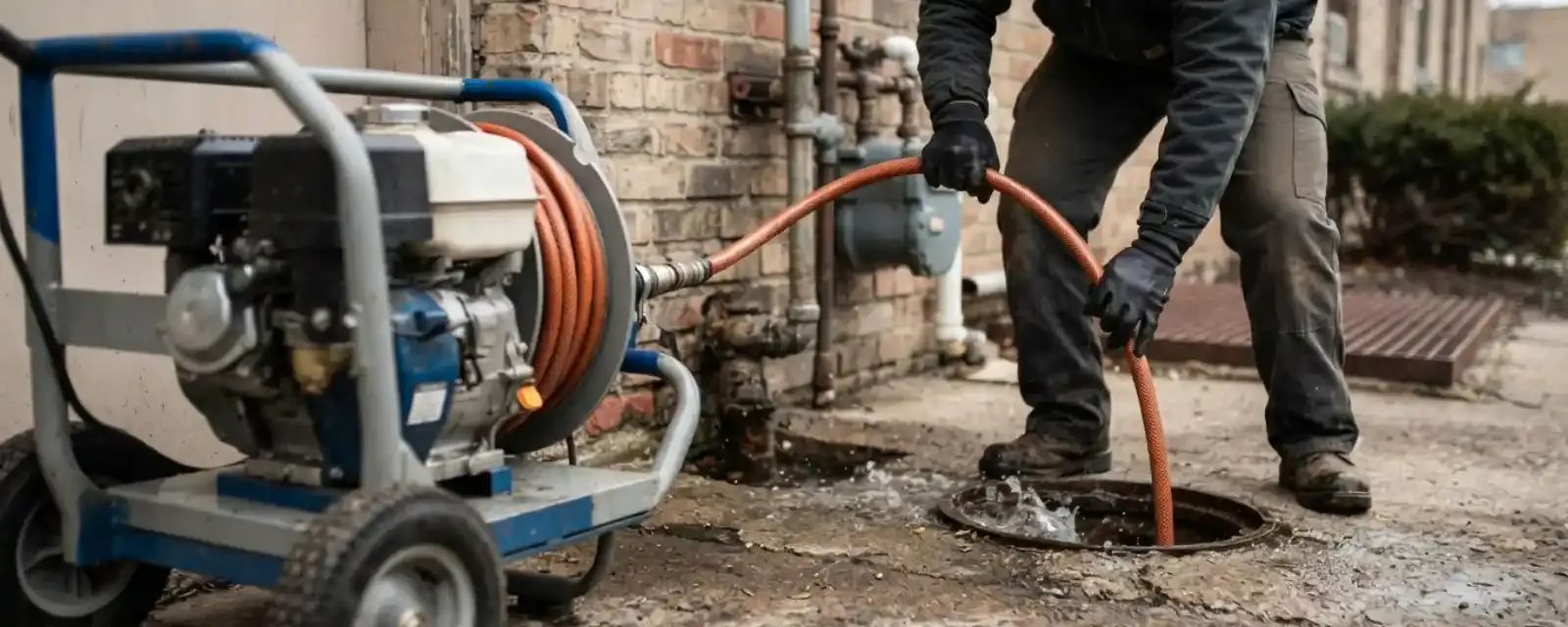
Hydro jetting when a line is backing up: what to do first
A backup is the urgent version of a clog. These steps come before the jetter arrives.
Stop every fixture
Flushing, laundry and showers all push more water into a blocked line.
Leave the cleanout alone
Opening a cleanout under pressure can release a flood of waste. Let the plumber do it.
Protect the floor
Put towels or a bucket at the lowest drain and keep people away from wet areas.
Say whether a snake already failed
It tells the dispatcher to plan for jetting or a camera look.
Why a snake did not fix it
A drain snake punches a hole through a blockage. The water then flows through that hole until debris builds up around it again. That is why many homeowners hear the same story: the plumber snaked it, it worked, and a few weeks later it clogged again.
Jetting works differently. Pressurized water travels the length of the pipe, strips grease and scale off the wall and flushes the loosened material downstream. In lines with years of coating, the opening can return close to its original size. Roots cut by a jetter's nozzle are also flushed out, though roots can regrow unless the pipe is repaired.
Situations where jetting makes sense
These are the calls where we raise jetting first.
- A snake stopped partway through the line. A hard obstruction, a collapsed section or heavy buildup can all stop a cable. A camera shows which before the jetter goes in.
- Repeated clogs in the same line. A coating on the pipe wall is the common cause.
- A restaurant or multi-unit building line. Grease builds up fast where many people use the same drain. See commercial plumbing.
- Slow main drain with no single blockage. Gradual narrowing from scale and grease.
- Root intrusion in an older sewer line. Jetting clears roots from the line, and a camera shows whether the pipe needs repair.
Jetting versus cabling versus repair
Each method has a place. A plumber who offers only one tool will recommend that tool.
| Question | Cable or snake | Hydro jet | Repair or replace |
|---|---|---|---|
| Does it clear a hard blockage? | Often | Often | Not applicable |
| Does it clean the pipe wall? | No | Yes | No |
| Safe for broken or collapsed pipe? | Yes, with care | No, camera first | Yes, this is the fix |
| Likely to prevent a repeat clog? | Rarely | Often, if the pipe is sound | Yes, if the damage was the cause |
The right order is usually: describe the symptoms, inspect with a camera if the pipe is old or the history is unclear, then choose the tool.
When jetting is not the right call
Hydro jetting is not safe for every pipe. Old cast iron that is flaking, clay pipe with loose joints and any line with a known crack or offset can be damaged by high pressure. A camera inspection before jetting prevents that mistake, and our sewer camera inspection is the usual first step on older lines.
Jetting also does not fix a broken pipe. If the camera shows a collapse, a break or a section that has sagged, the line needs sewer line repair. In that case jetting would only clear water out of a pipe that is still failing.
Guilford homes: age of the pipes matters
The town center around the Green has houses from the seventeenth century forward, and the National Park Service counts roughly 640 buildings in the historic district, with about four in ten built before 1900. Drains in homes of that age are more likely to be cast iron, clay or older mixed materials, and they are the lines where we ask for a camera look before any jetting.
Newer subdivisions along the shoreline roads and inland have PVC or ABS drains, which tolerate jetting well. Tell the dispatcher what you know about the age of the house and its drain material.
What affects the price of hydro jetting
Jetting costs more than a basic cable clearing because it uses more equipment.
- Length and size of the line.A short four-inch branch is quicker than a long main.
- Camera work.Inspection before or after jetting is a separate line on the quote.
- Access.A cleanout makes setup quick. Without one, the plumber may have to remove a toilet or find another access point.
- Severity of buildup.Heavy scale takes more passes.
- Hour of the call.After-hours visits are quoted as emergencies.
Jetting to clear a long-term buildup is maintenance, which insurance does not cover. A sudden backup that damages the house may be covered under a water backup endorsement.
Drain keeps clogging?
Call the 24/7 line and say how often it happens and whether a snake has been tried. For a basic clog, start with drain cleaning. If the line goes all the way to the street, tell the dispatcher about that too.
Questions we hear on calls
Yes, when a backup is an emergency. The line is open 24/7, and the dispatcher decides whether jetting, cabling or a camera visit comes first.
In sound pipe, no. In old, cracked or collapsed pipe it can, which is why a camera inspection comes first on older lines.
Jetting removes the coating that causes repeat clogs, so it often lasts longer, but roots and damaged pipe can bring clogs back.
It cuts and flushes roots from the line. If roots keep returning, the pipe has an opening that needs repair.
Jetting a line to the tank is fine. Do not jet into the tank or leach field. Tell the dispatcher if the house is on septic.
Yes. Restaurant and multi-unit lines are among the most common jetting jobs.
Sources for the local details on this page
The local facts above come from the National Park Service nomination for the Guilford town center district and Guilford Health Department environmental health page. Rules and figures can change, so check with the town or state office before you rely on them for a permit or a purchase.