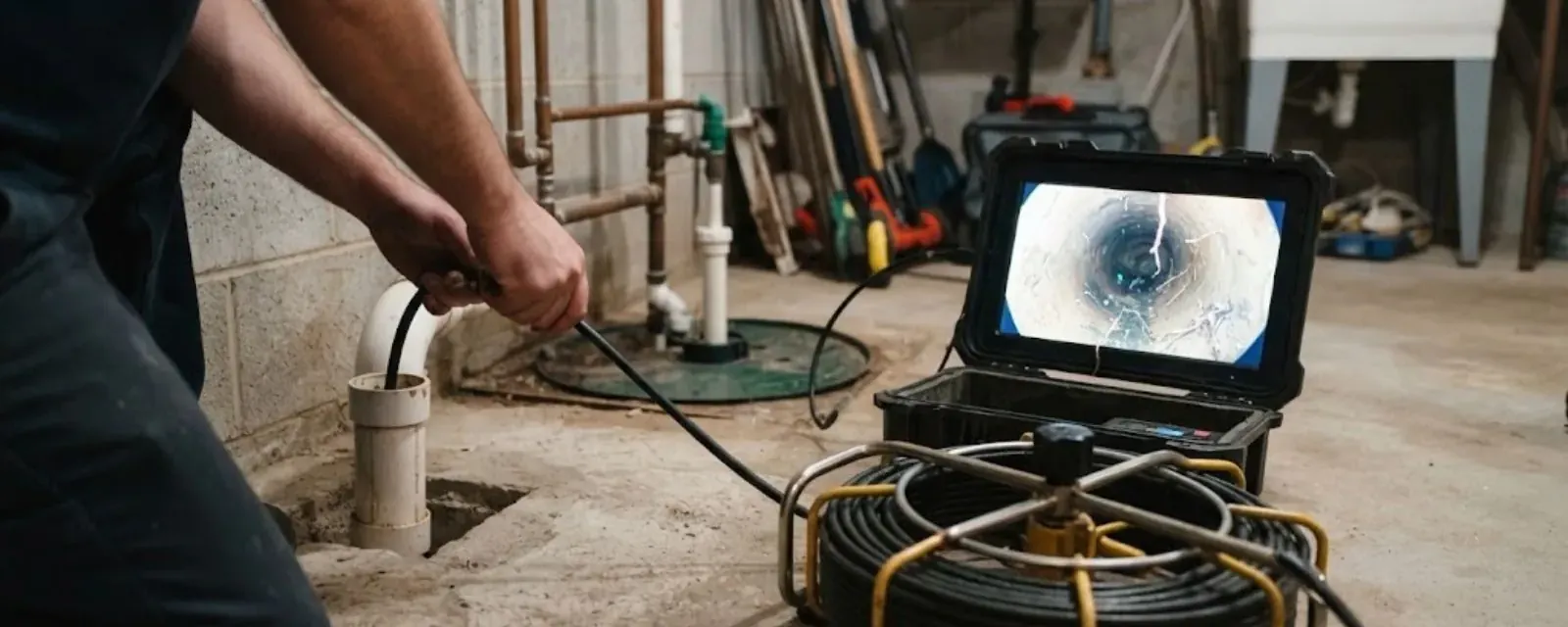
What a camera inspection shows
The camera head carries a light and a lens that sends a live image to a monitor. As it moves through the line, the plumber watches for root intrusion, cracks, offset joints, bellies where water collects, scale and grease, foreign objects and collapses. A locator on the surface tracks the camera so the exact position and depth of any problem can be marked.
Most inspections give you a recording and a clear idea of what, if anything, needs doing. Some also give a rough length of the line and the number of bends. The point is to decide between cleaning and repair on evidence.
When a camera inspection is worth it
These are the reasons homeowners and buyers ask for one.
- A drain that keeps clogging. Repeating clogs mean something in the line is catching debris.
- Before you buy an older house. A line in poor shape can mean a large expense soon after closing.
- Before hydro jetting an old line. To make sure the pipe will survive the pressure. See hydro jetting.
- After a repair. To confirm the new section is clear and aligned.
- When tree roots are near the line. To see whether any have entered.
- When a backup cannot be explained. The camera tells whether the blockage is in your line or beyond.
What different findings mean
A camera shows what is in the pipe. This table links the common findings to the usual next step.
| What the camera shows | What it usually means | Usual next step |
|---|---|---|
| Fine roots at joints | Roots entering at gaps | Cut and consider spot repair or lining |
| Scale or grease coating | Normal aging or kitchen waste | Jetting |
| Standing water in a section | A belly or low spot | Repair or replace that section |
| Offset joint | Ground movement | Spot repair |
| Crack or break | Damage, sometimes with soil intrusion | Repair or lining |
| Collapsed pipe | Material failure | Excavate and replace |
Inspections for house buyers
In a house built decades ago, the sewer line is one of the largest hidden costs. A standard home inspection does not usually include a camera look at the lateral. A buyer can ask for one, and the findings can be used to negotiate or to plan for a repair.
Guilford has a historic town center, shoreline neighborhoods and newer subdivisions, so the pipe materials and ages vary widely from street to street. Because the town has no municipal sewer, a house you buy here has an on-site system, so ask for the septic inspection as well. The camera only covers the line, not the tank.
The camera and your septic system
The camera can inspect the line from the house to the tank, but not the tank or the leach field. In Guilford the health department reviews and inspects new, repaired and enlarged septic systems, and its page says several areas of town must be inspected yearly. Tell the dispatcher when the tank was last pumped, and keep the pumper's record with the camera video.
What affects the price of a camera inspection
A clear price comes before the visit. These details set it.
- Length of the line.A short run costs less than a long one.
- Access.A cleanout makes the camera easy to insert. Without one, it goes in through a toilet or a vent.
- Locating.Surface locating adds time but is worth it before any dig.
- Cleaning needed first.A blocked line has to be cleared before the camera can pass.
- Recording and report.You can ask for the video and notes.
A camera inspection to investigate a clog is usually a plumbing expense, not an insurance one. After a covered loss, ask your insurer whether the inspection is part of the claim.
Need to see what is in your line?
Call the line and describe what is happening. If water is rising now, say so, and the call becomes an emergency. See sewer line repair for what comes after the camera.
Questions we hear on calls
A typical inspection takes an hour or less, depending on the line and how much cleaning is needed first.
Yes, ask the plumber to share the recording and notes.
Yes. It shows what is blocking the pipe and where it is.
Yes, and in Guilford that is the usual case. It inspects the line between the house and the tank, but not the tank or leach field.
Yes. Tell the dispatcher the property address and when you need the result.
Usually not. An active backup is an emergency, and the plumber may use the camera afterward.
Sources for the local details on this page
The local facts above come from the Guilford Health Department environmental health page and town's septic system brochure. Rules and figures can change, so check with the town or state office before you rely on them for a permit or a purchase.