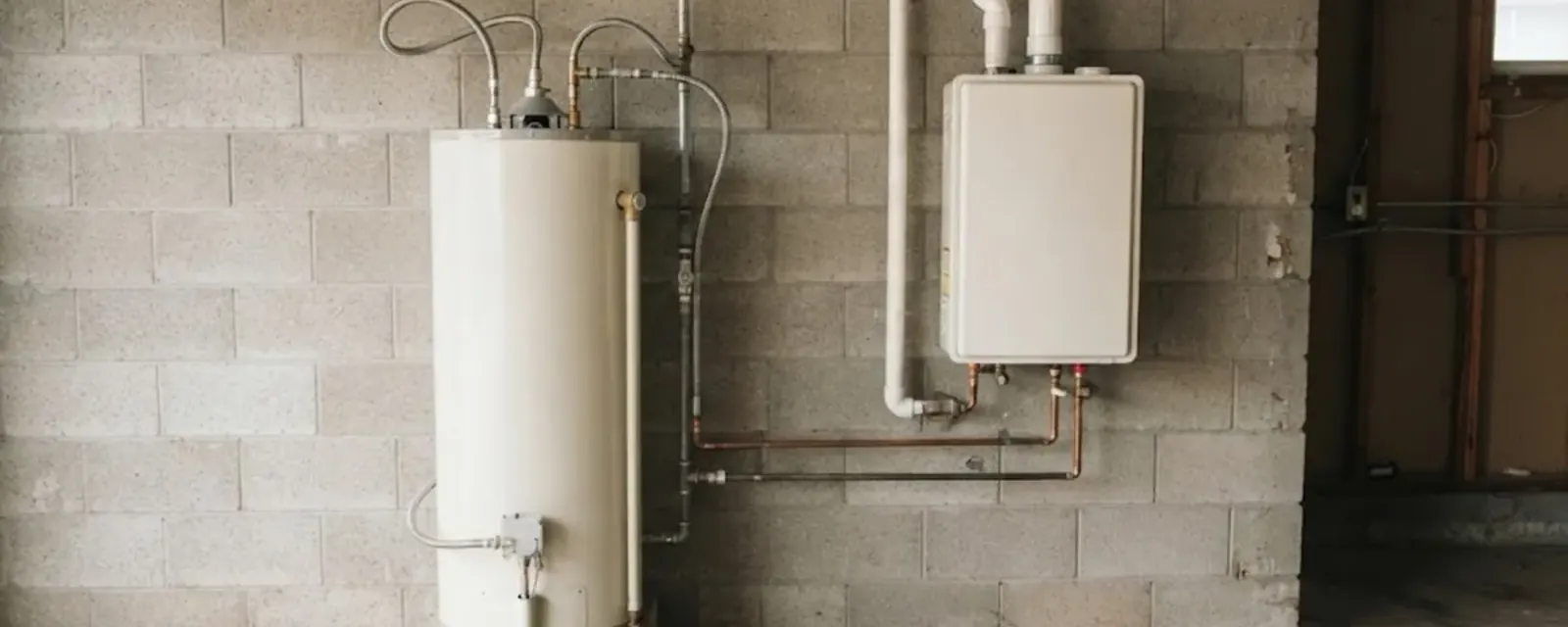
Common venting types
Which one your heater uses depends on the model and the house.
| Type | How it works | Notes |
|---|---|---|
| Natural draft | Hot exhaust rises through a flue to a chimney or vent pipe | Needs a working chimney or a vertical vent, sensitive to back-drafting |
| Power vent | A fan pushes exhaust through a small pipe, often out a side wall | Uses electricity, more flexible routing |
| Direct vent | Two pipes, one for exhaust and one for outside air | Sealed combustion, good for tight houses |
| Condensing | High-efficiency unit with plastic vent and a condensate drain | Needs a drain for acidic condensate |
Rules every vent follows
These principles apply across types. The manual lists the exact numbers for your unit.
- The right size and material. A vent pipe that is too small or the wrong material restricts flow or corrodes.
- Upward slope toward the outlet. Horizontal runs rise, so exhaust moves out and condensate drains back.
- Tight, sealed joints and secure supports. Leaks let exhaust into the house.
- Clearance from combustibles and windows. Heat and fumes must stay away from wood and openings.
- Combustion air. The heater needs fresh air to burn properly, especially in a closet or tight basement.
- A correct termination. The outlet must clear snow, shrubs and any air intake.
Guilford note: which code applies and which permit
The 2022 Connecticut State Building Code applies to permit applications filed since October 1, 2022, and adopts the 2021 International Plumbing Code. The code materials state that the International Fuel Gas Code is not adopted by the state, and that gas piping and gas appliances follow NFPA 54 and NFPA 58 through the Fire Safety Code. The state may update the code, so confirm the edition with the town.
The Guilford Building Department takes permits online, requires a valid state license and liability insurance and lists mechanical work, including boilers and HVAC, and plumbing as separate types. It also lists an LP tank as needing a mechanical sub-permit. Ask the department which permit applies to a gas water heater replacement at your address.
Signs the vent is not working, and what to do
Watch for soot or scorch marks around the draft hood, a flame that flickers or rolls out, rust streaks on the vent, a smell of exhaust and a carbon monoxide alarm that sounds. In winter, a vent that freezes over or fills with snow can block a direct-vent unit.
If you see any of these, shut off the heater and call. A sounding carbon monoxide alarm is an emergency. Leave the building and call 911. See our water heater installation page for how a plumber plans the vent before the tank comes in.
Replacing a water heater means looking at the vent
A replacement heater is the time to check the vent. An old natural draft flue may be corroded, undersized for a new, more efficient unit or sloped wrong from years of settling. Changing from a standard heater to a power vent or condensing model changes the vent entirely, with new holes through the wall, new pipe and sometimes a condensate pump.
Moving a heater changes the vent route. Tankless gas units often vent differently than tanks, so a switch needs a vent plan from the start. Our tankless page explains how.
Carbon monoxide and the alarm you need
Carbon monoxide is a colorless, odorless gas. A working alarm on every level with sleeping areas, and one near the heater, is cheap protection. Replace alarms at the end of their rated life and test them monthly. If an alarm sounds, get everyone outside first, call 911 and do not return until you are cleared.
Have the heater and vent inspected each year. A vent that was fine at installation can corrode, shift or collect a nest over time. An annual look, along with a check of the burner flame, catches most problems before they reach the house.
Questions to ask before a vent is installed
A good installer answers each one plainly.
| Question | Why it matters |
|---|---|
| What vent type does this unit require? | Natural draft, power vent, direct vent and condensing units are not interchangeable |
| Where will the vent terminate? | It must clear windows, air intakes, snow and shrubs |
| Is there enough combustion air? | A starved burner makes carbon monoxide |
| What happens to condensate? | High-efficiency units need a drain and sometimes a neutralizer |
| Who files the permit? | The license holder usually does |
| How will the vent be tested? | Draft, spillage and leaks should all be checked |
Old chimneys and flue liners
Many older houses use a masonry chimney as the vent for a water heater and a furnace together. When a more efficient furnace replaces the old one, the water heater alone is left in a chimney that is far too large. The exhaust cools, condenses in the flue and drips back, which corrodes the vent or fails to rise at all. A smaller metal liner inside the chimney restores a safe draft.
A plumber or heating contractor looks inside the chimney with a mirror or a camera before reusing it. If you see rust flakes, a broken liner or loose brick at the bottom of the flue, mention it on the call.
Questions we hear on calls
Only if the unit is rated for it, such as certain condensing or power-vent models. Standard natural draft heaters need metal vent pipe.
It is exhaust flowing back into the room because the vent cannot draw. Causes include a blocked flue, a negative pressure in a tight house or a poor vent design.
Clearances are set by the manual and the code and are not the same for every model. A plumber confirms for your unit.
Guilford lists mechanical and plumbing permits as separate types and asks for a valid state license and insurance. Ask the building department which applies to your replacement.
The state's 2022 code materials say the International Fuel Gas Code is not adopted and that gas piping and gas appliances follow NFPA 54 and NFPA 58 through the Fire Safety Code.
Yes. See North Branford and Clinton.
Sources for the local details on this page
The local facts above come from the 2022 Connecticut State Building Code and Guilford Building Department permit page. Rules and figures can change, so check with the town or state office before you rely on them for a permit or a purchase.