What the mixture actually does
Baking soda is a mild base and vinegar is a mild acid. Together they fizz, which can loosen a thin layer of grease and soap scum from a pipe wall. That is all. The reaction does not dissolve hair, a hard wad of paper or a heavy grease plug, and it does not break up roots or collapsed pipe.
Used on a slow sink, followed by hot water, it may improve the flow for a time. Used on a standing, fully clogged drain, it mostly adds liquid to a pipe that cannot drain.
What works for which clog
The cause decides the tool.
| Clog type | Tries first | Escalate to |
|---|---|---|
| Slow sink with soap film | Hot water flush, baking soda and vinegar | A drain snake |
| Hair in a tub or shower | Drain strainer, small plastic hair snake | A cable machine |
| Toilet blockage | A flange plunger | A closet auger |
| Kitchen sink with grease | Hot water and dish soap flush | Cabling or hydro jetting |
| Several drains slow together | Do not use home remedies | A plumber for the main line |
Guilford note: septic tanks and what you pour down the drain
Guilford has no municipal sewer, according to the town's plan of conservation and development. Waste goes to a tank and leach field on your own lot. The health department says every septic system must be pumped every five years and that several areas must be inspected yearly because of lot size and soil. Connecticut Water's 2025 water quality report for the Guilford System goes further, advising customers to inspect tanks every two years and clean as needed.
That is why chemical drain openers are a worse idea here than in a town with a sewer. They flow into your own tank, and strong chemicals can interfere with the bacteria that break down waste. If the clog will not clear with a plunger or a snake, call a plumber instead of escalating to stronger products.
What to avoid
Some home fixes cause more trouble than the clog.
- Chemical drain openers on a standing clog. They sit in the pipe, can burn skin if they splash back and can damage older pipe.
- Mixing different cleaners. Bleach and acid products release dangerous gases.
- Boiling water on PVC or a cracked toilet. Very hot water can soften plastic joints and crack porcelain.
- Running a disposal on a clogged drain. It strains the motor and spreads waste.
- Ignoring a repeat clog. A drain that clogs again and again has a structural problem. See drain cleaning.
When a home remedy is the wrong move
If the toilet, tub and a floor drain are all slow, or if a drain gurgles when you run another fixture, the blockage is in the main line. Nothing you pour in at a sink will reach it. Stop using water and call. A plumber can cable the line and, if it keeps returning, recommend hydro jetting to clean the pipe wall.
A safer routine for slow drains
The best clog is the one that never forms. Use a strainer in every tub, shower and kitchen drain. Run hot water for half a minute after washing dishes to move grease farther along. Scrape plates into the trash, not the sink, and never pour cooking fat down a drain.
Once a month, pour a kettle of hot, not boiling, water into slow drains. If a sink is sluggish, use a plunger with a good seal before anything else. A small plastic drain snake that costs very little pulls hair out of tubs and bathroom sinks in a minute.
Home remedies compared
Each remedy has a limit.
| Remedy | Works on | Risks and limits |
|---|---|---|
| Hot water flush | Light grease film | Not for PVC when boiling, not for a standing clog |
| Baking soda and vinegar | Thin soap and grease film | Weak, no effect on hair or solids |
| Plunger | Sink, tub and toilet clogs near the fixture | Needs a good seal, no use on a main line clog |
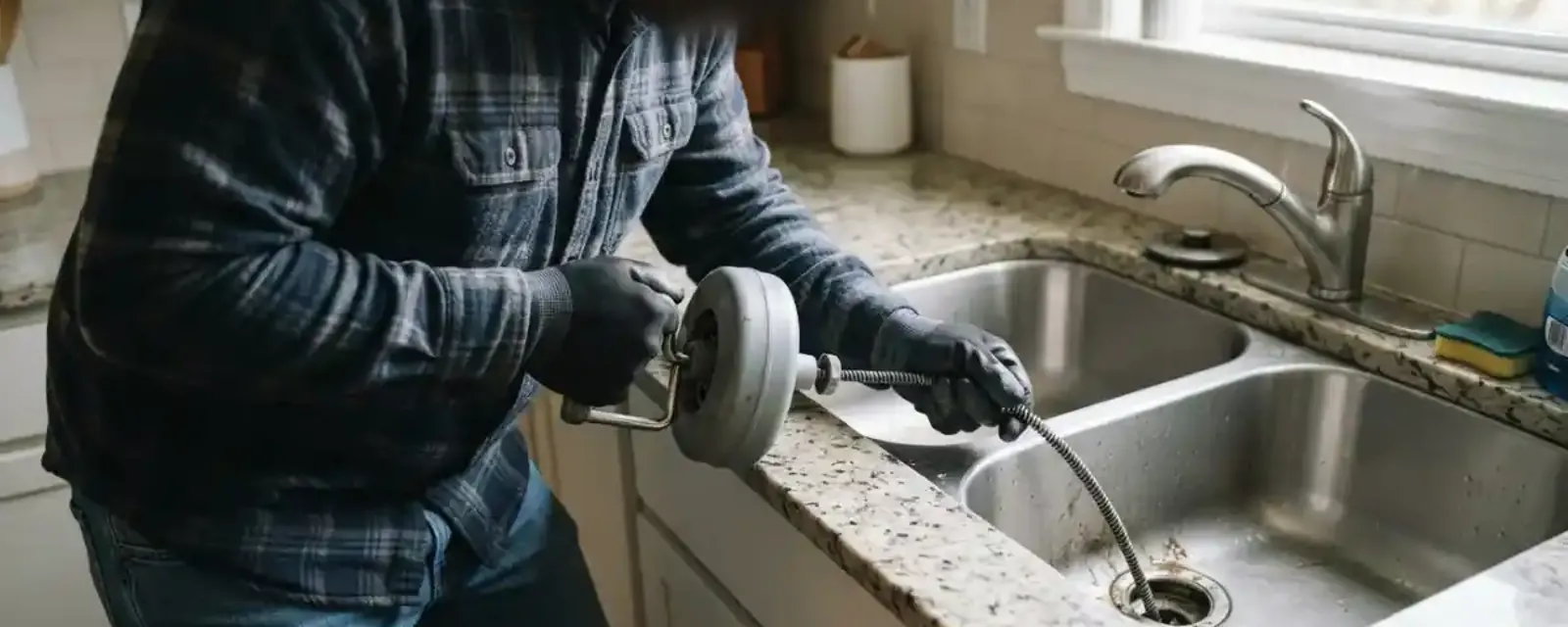
| Hand snake | Hair and a short blockage | Can scratch porcelain, needs patience |
| Chemical drain opener | Mostly grease | Burns skin, harms older pipe, risky on septic |
| Enzyme cleaner | Slow buildup, as maintenance | Slow acting, not for a full clog |
Enzymes, bleach and the antibacterial question
Enzyme drain products digest organic buildup slowly. They are a maintenance tool, not an emergency fix. Used in modest amounts they are generally gentle on septic systems. Large doses of bleach and antibacterial cleaners are a different story, since a septic tank depends on living bacteria.
If a drain is stopped now, no cleaner will fix it quickly. The honest answer is a plunger, a snake or a plumber. A plumber who arrives with a cable machine clears most household clogs in a short visit. If it keeps coming back, ask about a camera look, covered on our sewer camera inspection page.
Is it a clog or a venting problem?
A drain that gurgles, glugs or empties in a slow spiral is not always blocked. Every drain needs air behind the water, supplied by a vent pipe that runs up through the roof. When the vent is blocked by leaves, a bird nest or ice, water cannot flow smoothly and the trap can be siphoned dry. No amount of fizzing powder fixes a blocked vent.
The clue is timing. A vent problem often shows when several fixtures run at once or in cold, icy weather. A clog shows up at one fixture every time. If you have tried a plunger and a snake without success, call and describe the pattern, because it tells the plumber where to look first.
Questions we hear on calls
Yes, in normal amounts it is mild enough for most pipes. It is also not strong enough to clear most clogs.
A small amount does little harm. The bigger risks are heavy grease, chemical drain openers and antibacterial products in large quantities.
The town health department says all septic systems must be pumped every five years, and some areas must be inspected yearly. Connecticut Water's report also advises inspecting septic tanks every two years.
The line may be coated or damaged, which a snake does not fix. A camera inspection shows the cause.
Yes, with the overflow blocked and enough water to cover the cup. It is often the best home fix.
Sources for the local details on this page
The local facts above come from the Guilford Health Department environmental health page and Connecticut Water 2025 Guilford System report. Rules and figures can change, so check with the town or state office before you rely on them for a permit or a purchase.