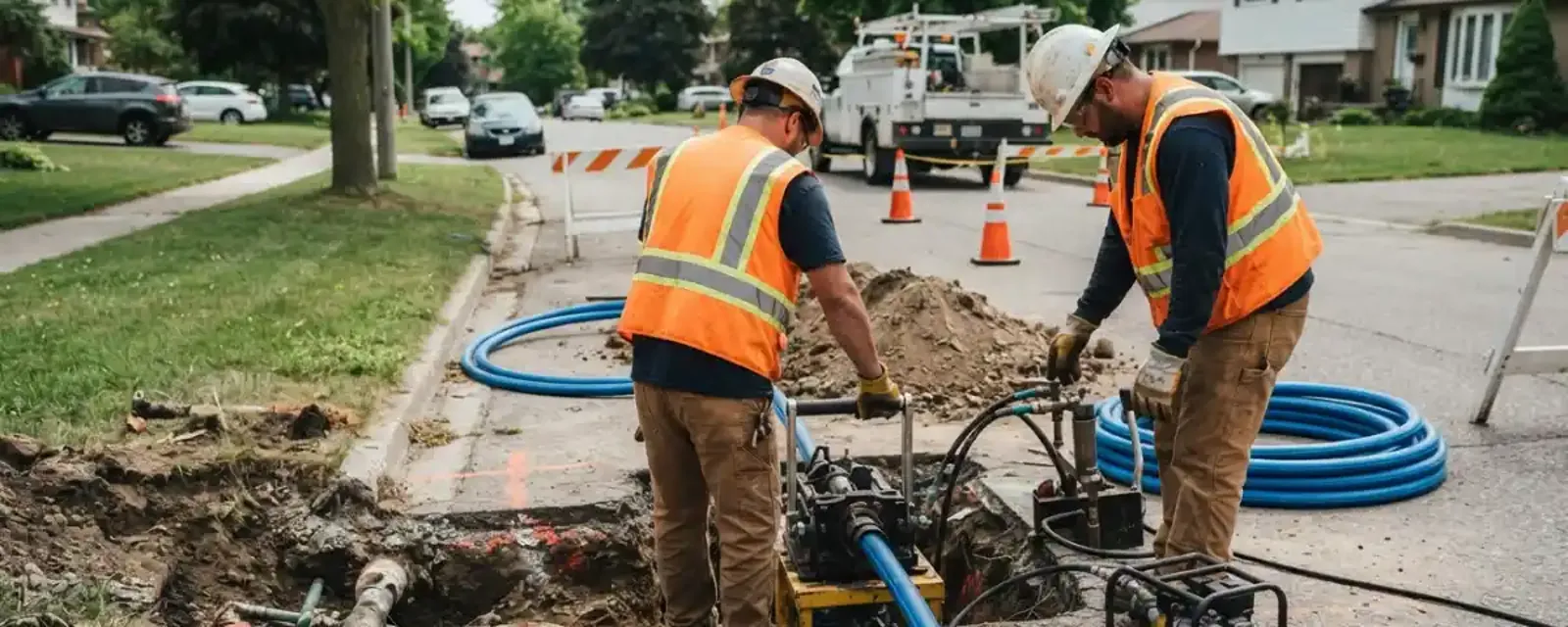
Who owns what: utility, homeowner and well
On a public water system, the utility owns the main in the street. The pipe from the meter or curb valve to your house is generally the homeowner's to repair, and Connecticut Water can tell you where its responsibility ends at your address.
The public water in Guilford is supplied by Connecticut Water through what the company calls the Guilford System, which also serves Clinton, Madison, Old Saybrook and Westbrook, so questions about the meter or the main go to them.
A house on a private well has its own line from the wellhead or pressure tank. That line is entirely yours. A 2011 town-commissioned study found the Mulberry Point, Tuttles Point and Indian Cove waterfront communities of Guilford were then on individual wells, about 350 homes. If you are not sure which you have, look for a water meter and a utility bill.
Signs the service line has failed
Service line problems have a pattern.
- The meter moves with every fixture off. Water is leaving the system between the meter and the house or inside the house.
- Pressure drops through the whole house. A leak or restriction before the fixtures reduces pressure everywhere.
- A wet or sunken patch in the yard. Buried leaks come to the surface along the path of least resistance.
- Dirty or discolored water after work on the street. Disturbed sediment or a failing line.
- The sound of running water outside. At night, when everything is quiet, a leak can be audible near the meter box.
Repair options for a buried water line
The choice depends on the damage, the pipe material and what lies above the line.
| Option | What it involves | Good fit when |
|---|---|---|
| Spot repair | Dig to the leak and replace a short section | A single break in otherwise sound pipe |
| Trenchless pipe pulling | A new pipe is pulled through the old route | Long runs under driveways, patios or landscaping |
| Full trench replacement | Dig the full length and install new pipe | Old, corroded or lead lines, or pipe in poor condition |
| Replace at the meter and valve | New connections and valves at either end | Failed valves or fittings, not the pipe itself |
Low water pressure: where it starts
Low pressure has several causes, and not all are in the service line. A clogged filter, a failing pressure regulator, a partly closed main valve or corroded pipe inside the house can all cause it. A service line with a partial restriction or a slow leak is on the list.
The plumber checks pressure at an outdoor spigot and at the inside fixtures. If outside is strong and inside is weak, the problem is in the house piping and the repiping page applies. If both are weak, the service line or the supply is the suspect.
Lead and older materials
Connecticut Water's 2025 water quality report for the Guilford System says some older homes and buildings may have service lines made of lead or unknown materials, and it points customers to ctwater.com/serviceline to check. If your house is old, ask whether your line has been inspected. A replacement project is the time to remove any lead or unknown material.
Water service pipe materials and burial depth are governed by the 2021 International Plumbing Code (IPC) that the state adopts, with a 42 inch frost depth in the state code.
Digging, utilities and licensed work
Before an excavation with power equipment, the state requires a call to 811 or the Call Before You Dig website at least two full working days before digging. A contractor you hire must make the call. That keeps gas, electric and water utilities from being struck.
The state licenses plumbers who work on the line between the utility and a structure under a class called P-7, limited sewer, storm and water contractor, alongside the unlimited P-1 contractor license. You can check any license on the Connecticut license lookup. Permit rules vary, so ask the Guilford Building Department what your project needs.
What affects the price of service line work
Buried-pipe jobs are among the most variable in plumbing.
- Length and depth.A short, shallow line is far less work than a long one under pavement.
- What is on top.Lawn is cheap to restore. A driveway, patio or deck is not.
- Method.Spot repair, trenchless and full replacement differ.
- Materials.Copper and plastic pipe differ in cost and code requirements.
- Permits and utility coordination.Utilities have their own requirements at the meter.
Insurance typically does not cover repair of a buried line from age or wear, though some policies offer an optional endorsement. Check yours.
Water line broken or pressure gone?
Call the 24/7 line. If water is flowing into the yard, shut the valve at the house and tell the dispatcher whether you have a meter or a well.
Questions we hear on calls
Yes. A broken service line is an emergency, and the line is open 24/7.
The pipe from the meter or valve to the house is generally yours. The main in the street belongs to the utility. Ask Connecticut Water if you are unsure.
Connecticut Water points customers to ctwater.com/serviceline. A plumber can also look at the pipe where it enters the house.
Sometimes. Trenchless methods reduce digging, but they need entry points and the right ground.
A short spot repair can finish in a day. Longer replacements take longer, depending on method and utilities.
Yes, we can repair the water line from a pressure tank to the house. Pumps and well casings belong to well specialists.
Yes. Clinton and Madison are on the same Connecticut Water system as Guilford, while Branford and part of North Branford are served by the Regional Water Authority.
Sources for the local details on this page
The local facts above come from the Connecticut Water 2025 Guilford System report, state's plumbing license classes and Call Before You Dig homeowner guidance. Rules and figures can change, so check with the town or state office before you rely on them for a permit or a purchase.