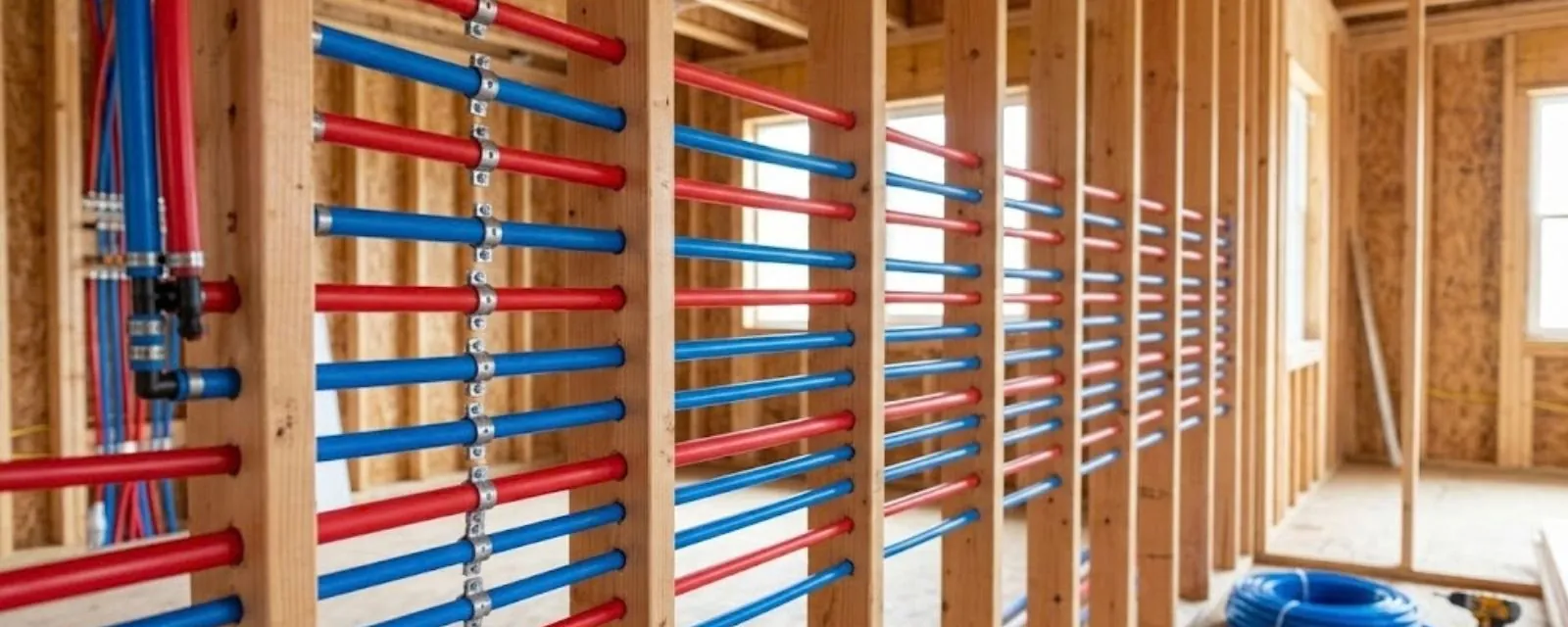
Signs that point to a repipe, not another patch
One leak is a repair. A pattern of leaks, or water that has changed, is something else. These are the signs that make us talk about repiping.
- Brown or rusty water when a tap has been idle. Galvanized steel corrodes from the inside, and the flakes show up as discolored water.
- Water pressure that has faded over the years. Rust and mineral buildup narrow old steel pipes until the opening is a fraction of the original.
- Repeated pinhole leaks. Tiny leaks in copper, especially at several places, can mean the pipe wall is thinning throughout, not just at one spot.
- Leaks in different places within a short time. Each repair relieves pressure and makes the next weakest spot fail.
- Stains on ceilings, floors or walls with no obvious source. Hidden leaks in walls often show up as stains first. Our leak detection service finds where the water is coming from.
Why older Guilford houses are candidates
The National Park Service nomination for Guilford's historic town center counts roughly 640 buildings in the district, with the largest group built after 1900 but a substantial share from earlier centuries. A house that has been renovated several times often has several generations of pipe in one building: original steel, mid-century copper and newer additions.
Mixed materials joined by brass fittings can corrode where metals meet. When we open a wall or ceiling to repair one leak, we look at what the neighboring pipe looks like. If the rest of the pipe is in the same state, we say so and show you.
Shoreline cottages that were later insulated and heated year-round bring another factor. Pipes that once ran in unheated space now sit behind finished walls, so a failure is hidden and costly.
Pipe materials: what we use and what to expect
The right material depends on the house, the building code and how much wall needs to be opened.
| Material | Strengths | Trade-offs |
|---|---|---|
| PEX (cross-linked polyethylene) | Flexible, fewer fittings, easier to route through finished walls | Not suitable for outdoor sun exposure, needs approved fittings |
| Copper | Long track record, rigid, handles heat | Higher material cost, can pinhole in aggressive water |
| CPVC | Low cost, approved for hot and cold lines | More brittle over time, heat limitations |
| Galvanized steel (existing) | Found in older homes | Corrodes inside, restricts flow, a candidate for removal |
Which materials are allowed is set by the 2022 Connecticut State Building Code, which adopts the 2021 International Plumbing Code (IPC). A licensed plumber builds to the code that applies and pulls any permit the job requires.
How a repipe is planned
Survey and quote
The plumber traces the existing lines, finds the water entry point, notes the fixtures and the wall and ceiling access, and tells you which walls would have to be opened.
Sequence and living at home
Whole-house repiping is usually done in stages so the house is without water for as short a time as possible. We discuss with you which bathrooms and kitchens lose water on which days.
Closing up
Pipes are pressure-tested before walls are closed. Drywall patching and painting are generally separate trades, so we tell you what the plumbing quote does and does not include.
What to do if a pipe fails while you are planning
A repipe is planned work, but old pipe does not wait for the plan. If one fails, do this.
Shut the main and open a low faucet
Closing the main and draining the line takes pressure off the break.
Do not tape or clamp over a corroded pipe
Corroded pipe next to a leak is usually thin. Pressure will find the next weak spot.
Keep furniture and electronics clear
Move what you can off the wet floor and out of the room below.
Call and mention the pipe type
Tell the dispatcher whether you see gray galvanized steel, copper or plastic.
What decides the price of a repipe
The price of repiping is not a single number for every house. These are the drivers.
- Number of fixtures and floors.A two-bath ranch and a four-bath colonial are different jobs.
- Access.Open basements and crawlspaces are quick. Plaster ceilings and tile walls are slow.
- Material.PEX, copper and CPVC differ in material and labor.
- Wall and finish repair.Drywall, plaster and paint are a separate cost.
- Permit and inspection.Permit rules vary, so we ask the Guilford building department what your project needs.
Insurance usually pays for sudden water damage, not for replacing pipes that are simply old. If you have had a covered loss, ask your insurer whether any part of the repair applies. Call the 24/7 line for a plan and a clear price for your house.
Water entering the house: the service line
Repiping starts at the point where water enters the house. If your problem is low pressure that began right at the meter or wellhead, or water that comes in dirty, the issue may be outside the walls. The pipe from the street or well into the house is covered on our water service line page, which explains the difference.
Thinking about repiping your house?
Call the line and describe the age of the house, the pipe material you can see and where the leaks have been. We will explain what a survey would involve. If water is actively leaking right now, tell the dispatcher so a plumber can be sent as an emergency.
Questions we hear on calls
Yes. The 24/7 line sends a plumber for a burst or leaking pipe at any hour. A repipe is planned once the emergency is over.
Galvanized pipe is gray, threaded at the joints and attracted to a magnet. Scratch it gently. Copper shows a reddish color underneath. Tell the dispatcher what you find and the plumber will confirm on a visit.
Not always. Flexible PEX can be routed through existing paths in many homes, which cuts the amount of wall opening. We tell you in the quote which walls would be opened.
Usually not. Repiping is staged so water is off for part of each day and sometimes restored overnight, depending on the job.
Yes. Replacing a single branch, such as one bath or the kitchen, is a legitimate project when the rest of the pipe is sound.
Replacing concealed pipe counts as new work under the state building code, so expect a permit. Your plumber normally files it with the town.
Yes. See our service area page for every town we dispatch to.
Sources for the local details on this page
The local facts above come from the 2022 Connecticut State Building Code and National Park Service nomination for the Guilford town center district. Rules and figures can change, so check with the town or state office before you rely on them for a permit or a purchase.