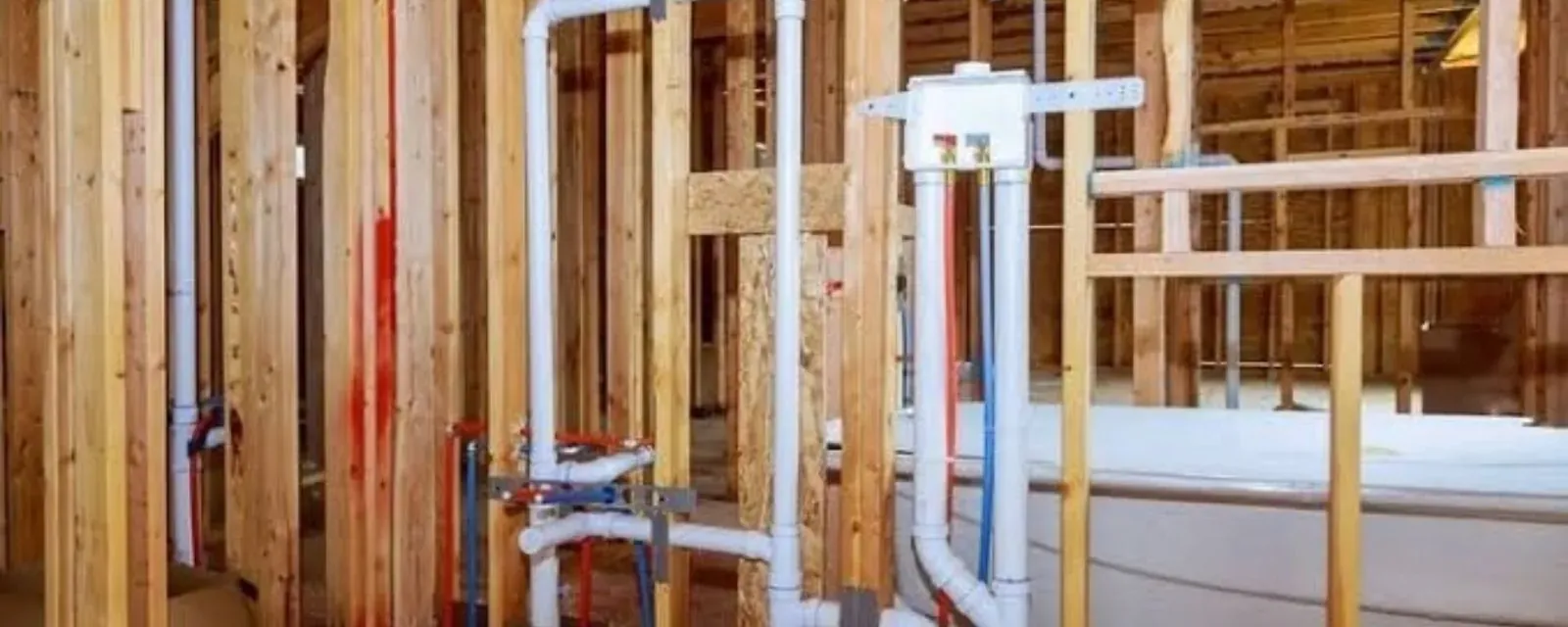
What a new fixture needs
Every plumbing fixture needs three things: water in, waste out and a vent so the drain flows freely. Putting a sink or toilet on the far side of a house from the existing stack means running new supply lines, a drain with the right slope and a vent connection. That is why moving a fixture across a room costs more than replacing one in place.
Drain sizing and fixture venting follow the 2021 International Plumbing Code (IPC) that the state adopts.
Before we quote, we look at where the existing drains and vents are, whether there is a crawlspace or basement below, how the floor is framed and where the nearest shutoff is. Remodels in older Guilford homes can reveal cast iron or galvanized pipe that has to be dealt with before new fixtures are added.
Common installation projects
These are the jobs we are asked about most, with what usually makes them simple or complicated.
| Project | Easier when | More work when |
|---|---|---|
| New toilet or sink in place of old | Rough-in sizes match | Floor or flange is damaged |
| Kitchen remodel hookups | Fixtures stay put | Sink or dishwasher moves |
| New bathroom | Next to an existing bath | Needs a new vent or drain run |
| Washer hookup | Drain and supply already behind the wall | Needs a new drain line |
| Utility sink or basement bath | Drain is above the sewer line | Below-grade needs a pump |
| Outdoor spigot | Short run from an existing line | Long run through a finished wall |
Water softeners and filters
A softener or filter changes the water, so the first step is knowing what is in it. We do not guess at hardness. We recommend testing your tap, and if you are on public water, asking your provider for its annual water quality report. If you are on a private well, test the well water through a state-certified lab, and ask your local health department which tests are recommended for your area.
Softener installation includes a bypass valve, a drain line to a laundry tub or floor drain, and an electrical outlet. A filter system needs space for the housing and room to change cartridges. We also tell you what to do with brine and backwash water, because some septic systems should not receive large volumes of softener discharge.
Gas and safety: what to do first
Gas lines are a safety issue before they are a plumbing issue. If you smell gas, do not turn lights or switches on or off, do not use a phone inside the building and do not look for the source.
- Leave the building. Get everyone, including pets, outside.
- Call 911 and the gas utility from outside. Use a phone away from the house.
- Do not return until cleared. Wait for the fire department or utility to say it is safe.
- Call us after the emergency is handled. We repair or install piping after the utility has made the area safe.
Who is allowed to do the work
Plumbing work in Connecticut is licensed work. A licensed plumber knows which parts of a project need a permit and inspection. Ask any plumber you hire for their license number, and check it with the state. We cover the details on our about page.
What affects the price of an installation
New fixtures are priced by pipe run and access more than by the fixture itself, and the price is clear before work starts.
- Distance from existing lines.The farther a fixture sits from supply, drain and vent, the more pipe.
- Fixtures supplied.High-end fixtures cost more and sometimes need specialty connections.
- Access.Open framing is cheap. Finished walls need patching.
- Permits and inspection.Replacing pipe is new work under the state code, so a permit is usually part of a repipe, and we handle the paperwork.
- Existing pipe condition.New fixtures on corroded pipe can mean replacing a section first.
New installations are rarely covered by insurance. A covered sudden loss might pay for fixing the damage, but not for upgrades. For your price, call during the day and describe the project.
Planning plumbing work?
Call the line and tell us what you want to install and where. If something is leaking right now, say so first, so the call can be treated as an emergency. You can also read about repiping if the project exposes failing pipe.
Questions we hear on calls
Yes, but the drain location matters. If the basement floor is below the sewer line, a sewage ejector pump is needed. Describe the layout on the call.
Yes. We recommend a water test first, so the system is sized to your actual water.
Leave the building and call 911 and the gas utility from outside. Do not look for the source.
Usually. It needs new drain, vent and supply lines, and the cost depends on distance and access.
Yes, including new supply valves and drain connections.
New fixtures are new work, so ask the Guilford Building Department which plumbing permit applies. Your plumber normally files it.
Yes. The 24/7 line is open for leaks of any kind, including problems on recent work.
Sources for the local details on this page
The local facts above come from the Guilford Building Department permit page, state's plumbing license classes and 2022 Connecticut State Building Code. Rules and figures can change, so check with the town or state office before you rely on them for a permit or a purchase.