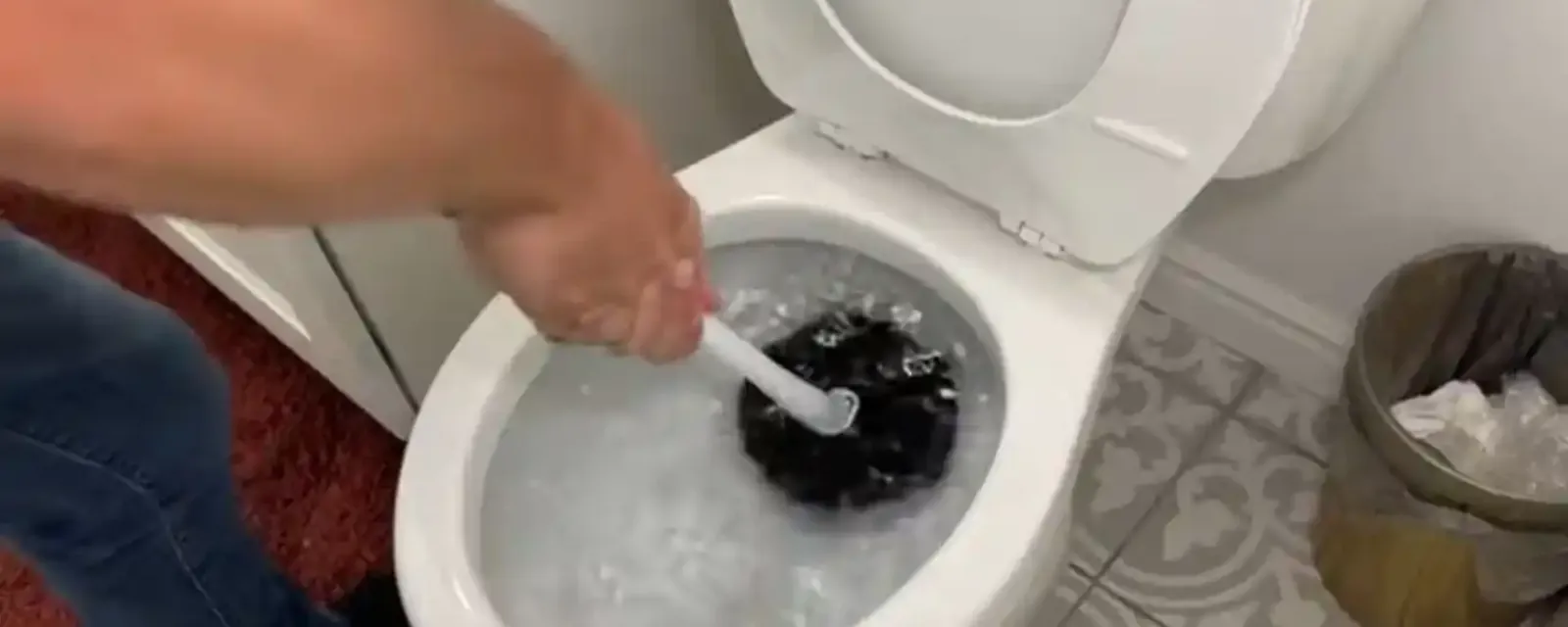
Work through the causes in order
Each step rules something out. Stop when the clogs stop.
- Look at what you flush. Only toilet paper and human waste. Wipes, even those labeled flushable, paper towels and cotton swabs do not break down.
- Check how the toilet flushes. Watch the bowl. A weak, slow swirl means the jets under the rim are partly blocked by mineral deposits.
- Try a flange plunger. It has a flap that fits into the drain opening. Plunge with steady pressure, not wild pumping.
- Use a closet auger. A flexible tool made for toilets that reaches past the trap and does not scratch the porcelain.
- Test the other drains. If the tub or sink slows when you flush, the problem is the line, not the toilet.
How toilets are designed to clear waste
A toilet works by siphon. The tank empties into the bowl fast enough to fill the trapway and pull waste along with it. A toilet that is slow to refill, has a low water level in the tank or flushes too weakly will not build the siphon. The fix may be adjusting the fill valve, cleaning the jets or replacing a worn flapper.
Older toilets that use more water per flush clear waste with brute force. Newer efficient models depend on good design and a clear trapway. Neither will work if the drain behind them is partly blocked.
Guilford note: what a septic tank does with wipes and paper
Guilford has no municipal sewer. The town's plan of conservation and development says so, and the health department says waste goes to on-site septic systems. In a septic tank, solids settle and liquids move on to a leach field. Wipes and heavy paper settle slowly or not at all and can pass into the outlet or the field, which is why plumbers and pumpers ask residents to keep them out.
The health department requires pump-outs every five years and asks pumpers to return a cleaning record within 30 days. If a toilet clogs and you cannot say when the tank was last pumped, find the record or call the department at (203) 453-8118. The department says septic repairs need its permit and points owners to licensed septic contractors.
Single toilet versus whole-house problem
Compare what you see with this table.
| What you see | Probably | Who fixes it |
|---|---|---|
| Only this toilet clogs, other drains are fine | Toilet or trapway blockage | You, with a plunger or auger |
| Toilet clogs and a nearby sink gurgles | Branch line partly blocked | A plumber, with a cable |
| Tub, toilet and floor drain all slow | Main line blockage | A plumber, with a cable or jet |
| Clogs started after a heavy rain or a wet season | High water table, root intrusion or a full tank | A plumber and, on septic, a pumper |
| Toilet clogs, then drains fine for weeks | Over-flushing paper or wipes | Change habits |
Mineral buildup and rim jets
The small holes under the rim of a bowl release water that rinses and helps push waste. Minerals can clog these holes over the years, which weakens the flush. Pour a cup of white vinegar into the overflow tube and let it sit before flushing. For stubborn deposits, a small mirror and a wire help you see and clear the jets.
If you have hard water, the problem returns. Ask your water provider for a hardness estimate. Connecticut Water, which serves Guilford, says its customer service can estimate hardness for your area even though its reports do not publish it.
When the toilet is the symptom
A toilet is the highest-volume fixture on the drain line, so it often shows a line problem first. Roots that enter old pipe, a section that sags or a cleanout cap that has failed all produce repeating clogs. A camera inspection finds the cause. Our toilet repair service and sewer camera inspection cover the two sides of this.
If sewage backs up into a tub or floor drain when you flush, stop using water and call at once.
What you can and cannot flush
This list prevents most repeat clogs.
| Item | Safe to flush? | Why |
|---|---|---|
| Toilet paper | Yes | Designed to break apart in water |
| Wipes labeled flushable | No | They hold together and catch at bends |
| Paper towels and tissues | No | They are stronger and slower to break down |
| Cotton swabs and dental floss | No | They tangle and snag |
| Feminine products | No | They swell and can block the trap |
| Cat litter, even if labeled flushable | No | It settles and hardens in pipes |
Using a plunger and an auger properly
A flange plunger has a rubber flap that fits into the drain opening. Cover the flap with water, press down slowly to push air out, then pull up sharply. The pull is what moves the clog. Repeat several times before you give up. Keep the bathroom door closed in case water splashes.
A closet auger is a short flexible cable inside a rigid tube with a curved end for the toilet bowl. Feed it into the drain, crank the handle and push gently. When you feel resistance, keep turning to break it up or hook it. Withdraw slowly and flush to test. If the auger will not pass, the blockage is farther than a closet auger reaches, which is the point to call a plumber.
Questions we hear on calls
The trapway may be partly blocked or the flush may be weak. A closet auger can clear the first, and a plumber can check the second.
No. They do not break down quickly, and they collect in pipes and tanks. Throw them in the trash.
Some older low-flow models do. Modern efficient toilets are designed to flush well, and a clog usually points to something else.
A tank that is overdue for pumping can slow every drain. Guilford requires every septic system to be pumped every five years.
Yes. Roots entering old drain pipe catch paper and waste. A camera shows them.
Call the 24/7 line. We serve Guilford and also North Branford and Clinton.
Sources for the local details on this page
The local facts above come from the Guilford plan of conservation and development and Guilford Health Department environmental health page. Rules and figures can change, so check with the town or state office before you rely on them for a permit or a purchase.