What the smell tells you
Match the smell and the location to the likely cause.
| Smell | Where | Likely cause | First move |
|---|---|---|---|
| Rotten eggs or sewage | A rarely used sink or floor drain | Dry trap | Run water for a minute and add a little oil to slow evaporation |
| Sewage | Every drain in the house | Full septic tank or blocked vent | Call the plumber and check the pump-out date |
| Musty or sour | Kitchen sink | Grease and food film | Hot water flush, clean the strainer and trap |
| Musty | Bathroom sink | Hair and soap in the trap or overflow | Clean the pop-up and overflow |
| Sewage near a toilet base | Around the toilet | Failed wax seal | See toilet repair |
| Gas or rotten egg with a hiss | Near a gas appliance | Gas leak | Leave and call 911 |
Dry traps and the water barrier
Every fixture has a P-trap, a bend that holds a plug of water to block sewer gas. If a basement floor drain, a guest bath sink or a laundry standpipe is not used for weeks, the water in the trap evaporates and gas rises through the pipe. The fix is to run water until the trap fills.
The 2021 International Plumbing Code (IPC) that Connecticut adopts requires fixtures to be trapped for this reason. A spoonful of cooking oil on top slows evaporation in a drain you rarely use.
Traps can also be siphoned dry when a vent is blocked, which is why a smell that comes and goes with weather or heavy water use deserves a vent check.
Guilford note: septic systems and the odor question
Guilford has no municipal sewer. The health department says sewage disposal is handled on-site by septic systems and that every one must be pumped every five years, with several areas inspected yearly based on lot size and soil. If every drain in your house smells and you cannot remember the last pump-out, the tank is the first thing to check.
The health department's form asks pumpers to return a record of each cleaning within 30 days, so the department should have a record of your last one. Ask when you call. Septic repairs need a health department permit, and the town advises using licensed septic contractors. The department's office is at 50 Boston Street and its phone is (203) 453-8118.
Buildup inside the pipe
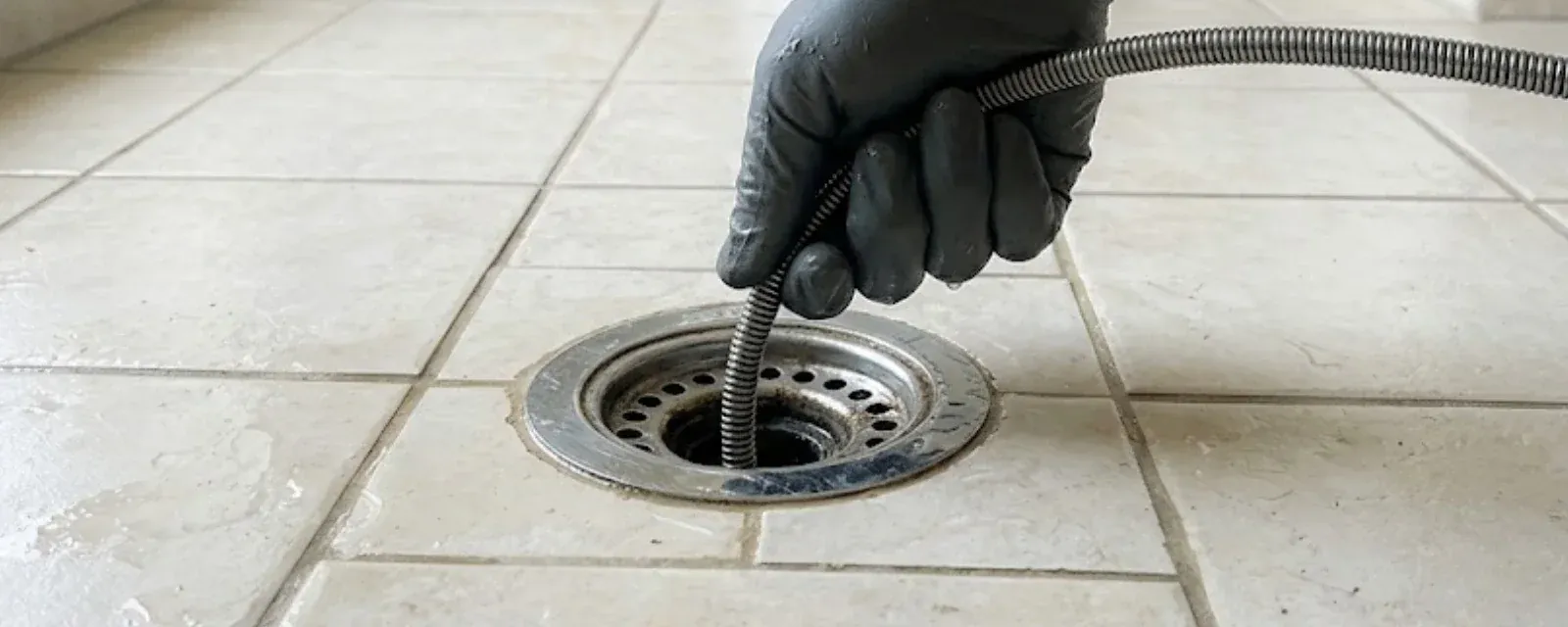
Grease, soap, food particles and hair coat the inside of drain pipes, and bacteria feed on that film. The result is a sour or musty smell that returns days after you rinse the sink. Pulling the trap and scrubbing it often solves a single fixture. If the smell is stronger after you pour hot water, the buildup runs further down the line, and our drain cleaning service or hydro jetting clears the coating.
Garbage disposals add their own smell from food stuck under the splash guard. Clean the rubber baffle with a brush and dish soap.
When to call about a drain smell, and what not to do
These situations need a call, not a home remedy.
- A strong sewage smell in the house that does not fade. Gas from a failed seal, a cracked drain pipe or a full tank.
- A smell with slow drains in more than one fixture. The main line or the tank is the suspect. See sewer line cleaning.
- Wet or green patches over the septic area in the yard. This points to a system problem. Call the health department and a septic professional.
- A smell of natural gas. Leave, call 911 and the gas utility from outside.
- A smell after a flood or heavy rain. Water may be entering the system through a failed seal or cleanout.
Vents and the roof
A vent pipe leaves the plumbing system through the roof and lets air in so water can flow. When a vent clogs, drains gurgle, traps empty and odors enter the house. A plumber can clear a blocked vent with a cable from the roof. If a vent has no cover or is too close to a window, smells can drift into the house even when the system works.
New bathrooms or kitchen remodels sometimes leave a fixture without a proper vent. If the smell started after work was done, mention it on the call.
A simple weekly routine that stops most drain odors
Most drain smells are a maintenance problem that you can head off in a few minutes. Rinse sink strainers weekly. Pour a kettle of hot water down kitchen drains after greasy dishes. Run water in guest bathrooms, basement floor drains and laundry standpipes that rarely get used.
Wipe the underside of the sink stopper and pull it out for cleaning every few months. Hair and soap collect on the stopper arm, and that film is the source of many bathroom sink odors. Clean the overflow channel with a thin brush, because the opening is a hidden place for mold.
If you do all of that and the smell stays, treat it as a signal that something deeper is happening, not as a cleaning failure.
Home deodorizing methods compared
Different methods suit different causes.
| Method | Good for | Not good for |
|---|---|---|
| Hot water flush | Light grease film | Dry traps, blocked vents |
| Baking soda and vinegar | Mild buildup and a quick refresh | Heavy buildup, anything past the trap |
| Scrubbing the trap and stopper | Single-fixture odors | Whole-house smells |
| Refilling a dry trap | Rarely used drains | Smells that return in a day |
| Calling a plumber | Whole-house, persistent or gas-like smells | Nothing, it is the right call here |
Questions we hear on calls
A dry trap, a dirty overflow or a blocked vent are the common causes. Run water, clean the overflow and see whether the smell stays.
In small amounts it is mostly unpleasant, but sewer gas contains hydrogen sulfide and methane. A strong or persistent smell needs a plumber, and a gas smell is an emergency.
The trap is probably dry. Pour a gallon of water into the drain. If the smell returns, the drain may have a failed seal.
The Guilford Health Department handles septic oversight at (203) 453-8118, and a plumber can check whether the problem is in the house line.
Yes. A tank that is overdue for pumping can back up odors and slow every drain. Guilford requires pumping every five years.
Sources for the local details on this page
The local facts above come from the Guilford Health Department environmental health page and town's septic system brochure. Rules and figures can change, so check with the town or state office before you rely on them for a permit or a purchase.