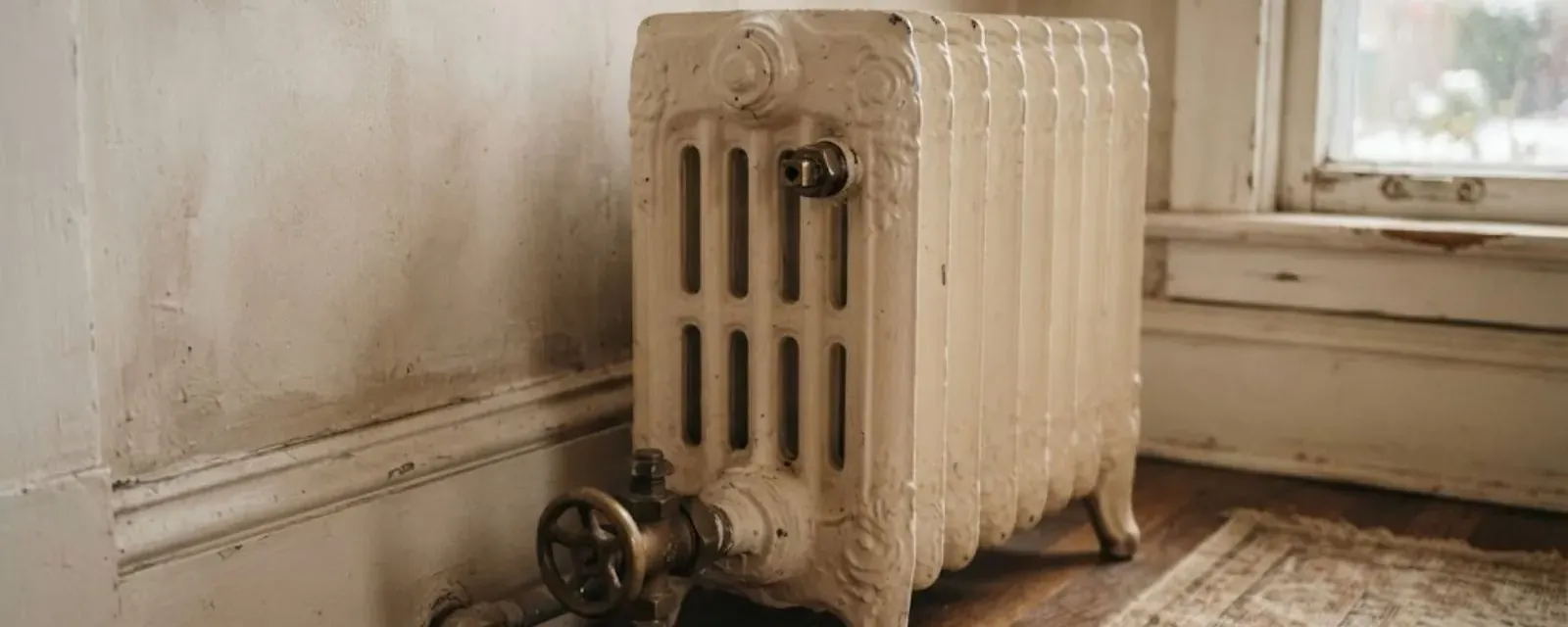
How a hot water baseboard system works
A boiler heats water. A circulator pump pushes it through copper pipe to finned-tube baseboards in each room. As the water gives up heat, it returns to the boiler. Zone valves or separate circulators divide the house so each thermostat controls its own area. An expansion tank takes up the water's growth as it heats, and a relief valve protects the system from over-pressure.
The system is closed. It should not lose water, and air should not need to be added. When a zone goes cold, either air has collected or something has stopped moving the water.
Before you bleed anything, check the basics
These checks take a few minutes.
- Thermostat. Set to heat, above room temperature, with working batteries.
- Boiler switch and breaker. The emergency switch is often near the top of the cellar stairs.
- Fuel. Oil level, gas valve open, or propane supply in the tank.
- Pressure gauge. A cold system is typically around 12 to 15 pounds. Near zero means water has been lost.
- Circulator pump. Is it warm and humming? A silent pump may be stuck or off.
Guilford note: fuels, licenses and permits for heating work
The state's gas safety page lists Southern Connecticut Gas as the gas utility for Guilford and notes that coverage varies by street, with many homes using oil or propane. If you smell gas, leave and call 911 and the gas utility from outside, and the state lists SCG's emergency number as 800-513-8898.
The Connecticut Department of Consumer Protection licenses plumbing and heating separately. Its heating, piping and cooling classes in the S series cover boilers, and burner and gas work have their own classes. The Guilford Building Department lists boilers and HVAC as mechanical work with its own permit type, requires a valid state license and liability insurance, and takes applications online.
How to bleed a baseboard zone
Bleeding releases trapped air through a small valve at a high point in the zone, usually on the end of the baseboard or at a bleeder near the boiler. Turn the boiler to cool and the circulator off, if you can. Put a small bucket or cloth under the valve and open it slowly with a key or a flathead screwdriver. Air hisses out first, then water. Close the valve when a steady stream of water appears.
Check the pressure gauge. If you have released water, it may have dropped. Many systems refill on their own through a fill valve. If pressure does not recover, or the gauge climbs too high, stop and call. Never open the relief valve to bleed air.
Symptoms and what to do
Match what you see with the next step.
| Symptom | Likely cause | Do this |
|---|---|---|
| One zone cold, boiler running | Air in that zone | Bleed the zone |
| All zones cold, boiler running | Circulator failure or air in the system | Call |
| Boiler will not fire | Fuel, ignition or a safety control | Check fuel, then call |
| Pressure at zero or very high | Leak, fill valve or expansion tank | Call |
| Banging or gurgling | Air, scale or low water | Bleed, then call if it persists |
| Water on the floor near the boiler | Leak at the boiler or a fitting | Shut off the water to the boiler and call |
When no heat becomes a plumbing emergency
In freezing weather, a house without heat is at risk of frozen pipes within hours if the temperature outside stays low and the house is not insulated well. The Connecticut State Building Code uses a frost depth of 42 inches, and the January average low in coastal New Haven County is about 23 degrees Fahrenheit according to NOAA. Open cabinet doors, let a faucet drip and call. A burst pipe is far more costly than a service call.
Our burst pipe repair page covers what happens next.
For boiler repair itself, see our boiler repair page.
Maintenance that prevents a cold house
Have the boiler serviced before the heating season. Many manufacturers recommend yearly service, and the technician cleans the burner, checks the controls and tests safety devices. Check the pressure gauge in the fall. Make sure the baseboards are free of dust and that furniture and curtains do not block them.
Know where your boiler switch, your fuel shutoff and your main water valve are. Keep the number of a heating professional you trust near the boiler. For oil, check the tank level monthly in winter, since a tank that runs dry after the last delivery needs to be bled before the burner will fire. For propane, the same applies to the tank gauge.
Warning signs from a boiler
These are the early signs that a service call is overdue.
- Yellow flame or soot around the boiler. This points to poor combustion and needs a professional.
- Rust or drips at joints and valves. A slow leak that will get worse.
- Frequent cycling on and off. A control or sizing problem.
- A new smell of fuel oil or exhaust. Call and ventilate the area.
- A carbon monoxide alarm that sounds. Leave and call 911.
Questions we hear on calls
Air collects at the highest or farthest points in the zone. Bleeding that zone usually restores the flow.
Only when a zone is cold or noisy. A closed system should not need frequent bleeding.
Many boilers have an automatic fill valve. Do not add water by hand unless you know how. Overfilling can open the relief valve.
The state licenses heating work in its S-series classes, with S-3 and S-4 covering boilers and heating piping, and burner work in B classes. Ask for the license class and check it on the state lookup.
The town lists boilers and HVAC under its mechanical permit type. Repairs that do not replace equipment may not need one. Ask the Guilford Building Department.
Yes. See North Branford and Clinton, where oil heat is common.
Sources for the local details on this page
The local facts above come from the state's heating, piping and cooling license classes and Guilford Building Department permit page. Rules and figures can change, so check with the town or state office before you rely on them for a permit or a purchase.