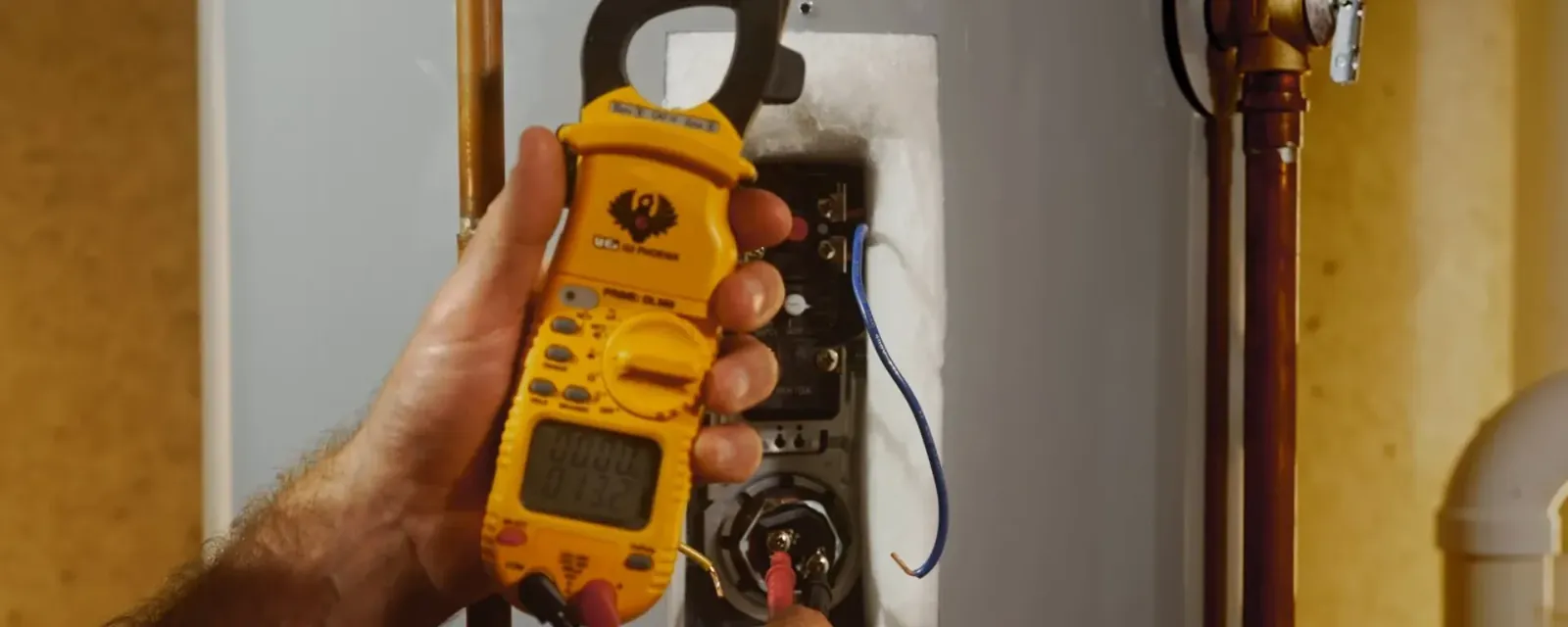
What a thermocouple does
A thermocouple is two dissimilar metals joined at a tip. When the tip is heated by the pilot flame, it produces a small voltage. That voltage keeps an electromagnet in the gas valve energized, holding the valve open. If the flame goes out, the tip cools, the voltage drops and the valve closes. The design is simple and has been used for decades because it fails safe.
Newer heaters may use a thermopile, a flame sensor and electronic ignition instead. The names change but the purpose is the same, to prove there is a flame before gas flows. A heater with electronic ignition does not have a standing pilot to go out in the same way.
Symptoms and likely causes
A pilot that will not stay lit has several possible causes.
| What happens | Likely cause | Next step |
|---|---|---|
| Pilot lights but goes out when you release the button | Worn thermocouple or weak pilot flame | Replace the thermocouple or clean the pilot |
| Pilot will not light at all | No gas, blocked pilot tube or a faulty control | Call a plumber |
| Pilot goes out after hours or days | Draft, venting problem or a failing thermocouple | Check venting, then replace the part |
| Flame is yellow or wavy | Poor combustion, dirty burner or blocked flue | Call, this is a carbon monoxide risk |
| Smell of gas | Leak | Leave the building and call 911 and the gas utility |
Guilford note: gas, propane and licensing for appliance work
The state's gas safety page lists Southern Connecticut Gas as the gas utility for Guilford and notes that service varies by street, with many homes on oil or propane. It lists the utility's emergency number as 800-513-8898. The Guilford Fire Department asks residents with gas or propane leaks to contact 911, so call 911 first from outside the building.
The state licenses gas work separately. Its G-1 and G-2 classes cover gas piping systems and approved gas appliances and utilization equipment for natural gas and LP gas, and its heating classes cover boilers and related equipment. The state pages we reviewed do not name water heaters, so ask any contractor which license class they hold, and check it on the state lookup. Guilford requires a valid state license and liability insurance for permits.
Safety comes before the repair
Gas work has risks that other plumbing repairs do not.
- If you smell gas, leave. Do not touch switches, call from outside and do not return until the utility or fire department says it is safe.
- Never keep relighting a pilot that will not stay lit. The failure is telling you something.
- Check for combustion issues. Soot, a yellow flame or a scorch mark above the unit is a sign of a venting problem.
- Keep a working carbon monoxide alarm nearby. It is the warning for incomplete combustion.
- Know where the gas shutoff is. A valve on the supply pipe near the heater turns a quarter turn.
What the repair involves
With the gas off at the control and the heater cool, the plumber removes the burner access cover, unscrews the old thermocouple from the gas valve and from its bracket by the pilot, and fits a new one at the same position in the flame. The tip must sit in the pilot flame for the right distance. Then the pilot is lit and the system is tested for gas leaks with a gas-safe solution or a meter.
The same visit should check the burner, the flue and the draft, because a heater whose thermocouple wore out may also have a dirty burner or a blocked vent. A new part on a heater with a venting problem is the wrong repair. If the whole heater is old and rusty at the base, replacing the unit may be wiser, and our water heater replacement page explains how that decision is made.
Cleaning versus replacing
Sometimes a pilot that will not stay lit has a dirty pilot tube or a sooty tip on the thermocouple. A careful cleaning with a soft brush and a short blast of compressed air can restore a good flame. If the thermocouple is bent, burned or corroded, replace it rather than cleaning it.
The part itself costs little. The labor and the gas safety check are the real value. A heater that has needed repeated pilot work is often at the end of its life, and if the tank is also leaking, leak detection and replacement planning belong in the conversation.
What to tell the plumber when you call
A short description speeds up the diagnosis and gets the right part to the door.
- The brand and the age on the data plate. Parts are specific to the model.
- Whether it runs on natural gas or propane. Different gas valves and orifices.
- What happens when you light the pilot. Does it light, stay lit, go out after a minute or after hours.
- Any smell, soot or scorch marks. These point to a venting problem.
- Whether the heater has ever been serviced. Maintenance history guides the plan.
Why gas appliances reward a licensed hand
A gas water heater, a gas boiler and a gas furnace all rely on tight connections and correct venting. A small leak at a fitting, an unsealed vent joint or a mis-set gas valve can go unnoticed until it causes harm. Licensed contractors carry the testing gear and training for those checks, and they work under permit rules that bring a second set of eyes through inspection.
That is the reason this guide describes the repair but stops short of a full do-it-yourself walkthrough. If you are comfortable with the repair, follow the manufacturer's instructions exactly and leak-test every connection. If you are not, the cost of a visit is small next to the risk.
Questions we hear on calls
If the pilot stays lit while you hold the button but goes out when you let go, the thermocouple is a prime suspect.
It involves gas, so mistakes can be dangerous. Many people prefer a licensed professional.
Many newer models use electronic ignition and a flame sensor. Check the label or the manual.
Yes. A gas water heater on propane uses the same safety design.
A licensed plumber or gas contractor. The 24/7 line is (203) 720-6269.
Sources for the local details on this page
The local facts above come from the state's plumbing license classes. Rules and figures can change, so check with the town or state office before you rely on them for a permit or a purchase.