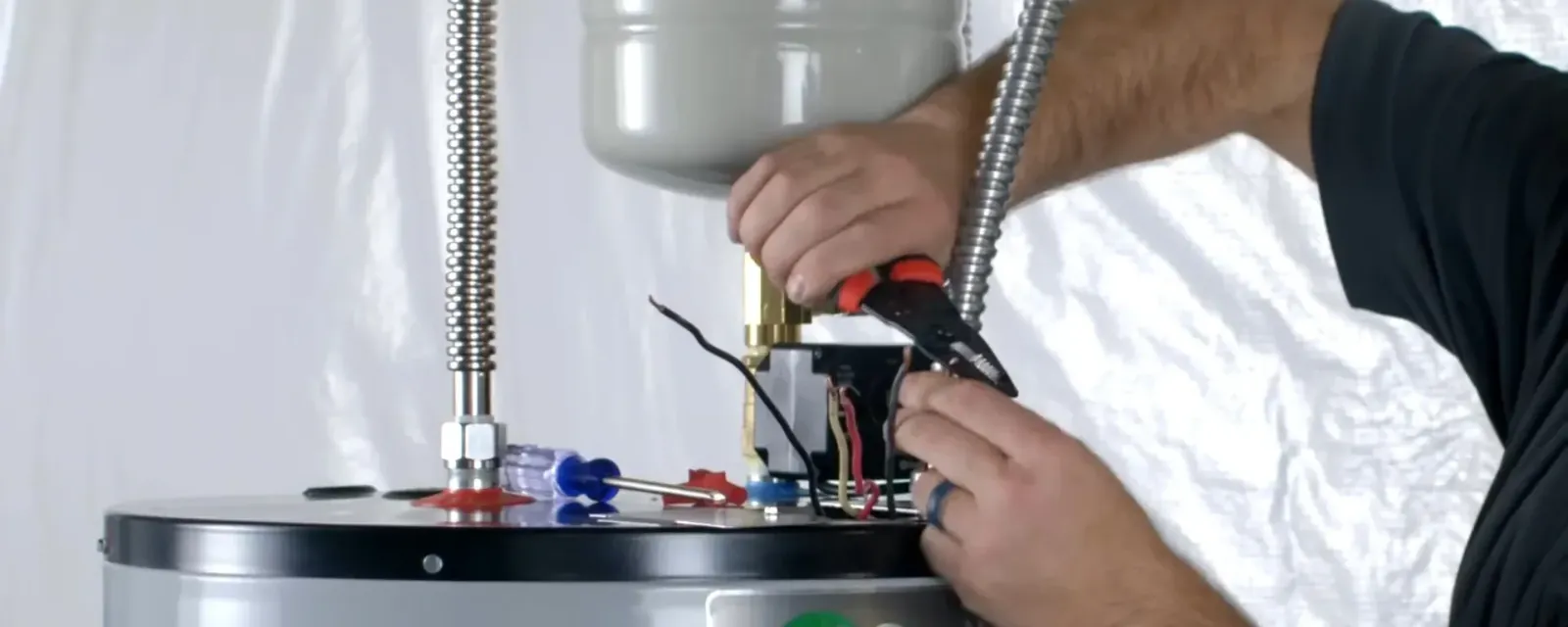
What the valve does and why it matters
Heating water in a closed tank raises pressure. A thermostat normally keeps the temperature in check, but if the thermostat or the burner fails, the water can overheat and the pressure can rise past what the tank was built to hold. The T&P valve opens to release hot water and steam before that point, which is why it is the last line of defense against a tank failure.
A discharge pipe attached to the valve carries released water to a safe place near the floor. It must not be capped, plugged or threaded at the end. A blocked discharge pipe defeats the whole purpose of the valve.
Dripping valve: what it might mean
A dripping valve is not always a bad valve.
| What you see | Likely cause | What to do |
|---|---|---|
| A drip that stops and starts as the heater cycles | Thermal expansion raising pressure | Ask about an expansion tank |
| A steady trickle all the time | Worn valve seat or high pressure | Test pressure, replace the valve if the pressure is normal |
| Rusty or crusty buildup on the valve | Corrosion from past leaks | Replace the valve |
| Hot water or steam shooting out | Overheating tank | Shut off power or fuel and call right away |
| Valve drips after you lift the lever | Debris on the seat | Flush and test again, replace if it keeps dripping |
Guilford note: permits, licenses and scald safety
The Connecticut State Building Code exempts stopping leaks and repairing leaks in pipes, valves or fixtures from permits, but the exemption does not apply if the repair requires replacing or rearranging valves, pipes or fixtures. Replacing a relief valve is a valve replacement, so ask the Guilford Building Department what applies. It requires a valid state license and liability insurance from a contractor who applies for a permit.
The Connecticut Department of Consumer Protection says people doing plumbing, heating and similar work must hold the appropriate Connecticut license, and it does not name water heaters in its scope pages. If you are unsure who may work on your fuel-fired heater, ask the licensed contractor which class they hold and check it on the state lookup.
The replacement, in order
This is a general outline. Your model may differ, and the manual wins.
- Turn off the power or the fuel supply. Switch the breaker off for electric heaters, and set a gas control to off or pilot.
- Close the cold water valve and relieve pressure. Open a hot tap in the house, then lift the relief lever slightly to release pressure.
- Drain a few gallons from the tank. Attach a hose to the drain valve until the water level is below the valve opening.
- Remove the discharge pipe, then unscrew the old valve. Use a pipe wrench and note the rating printed on the valve.
- Wrap the new valve threads with tape or sealant and thread it in. Hand tighten, then snug it with the wrench, without over-tightening.
- Reattach the discharge pipe, refill and check for leaks. Run a hot tap until air is gone, then restore power or fuel.
Getting the rating and the discharge right
A replacement valve must match the tank. The valve carries a pressure rating, a temperature rating and a BTU capacity that must meet or exceed the heater. The tank's data plate lists the maximum working pressure. A valve with the wrong rating may open too early or fail to open in time.
The discharge pipe should be the same size as the valve outlet, run downhill without a trap and end a few inches above a floor drain or the floor. Copper, CPVC and other approved pipe are acceptable, and plain PVC is not for hot discharge. If the piping is awkward, a plumber can correct it as part of the replacement, and see our water heater repair page for what else is checked.
When to call instead
Call if the valve will not come off, or if the tank is a gas or oil unit and you are not sure how to shut down the fuel safely. Call if the tank is old and the valve is a symptom of something larger, or if you cannot get the pressure down. Scalding hot water is a real danger, and a rusted valve can break off and open the tank.
If the heater is more than ten years old and leaking at the valve, ask whether it is time for a water heater replacement instead.
Pressure, expansion tanks and why valves drip
A relief valve that drips after every heating cycle is often reacting to thermal expansion. When the house has a check valve or a pressure regulator on the water supply, the expanding water has nowhere to go and pressure rises until the valve opens. The right fix is usually an expansion tank, not a new valve, because a new valve will do the same thing.
You can check house pressure with a gauge that screws onto an outdoor spigot. Normal household pressure is generally in a moderate range, and a reading near the valve's opening pressure is a red flag. A plumber can test it quickly and set the right pressure for your fixtures.
Relief valve do and do not
A short checklist for safe handling.
| Do | Do not |
|---|---|
| Test the valve once a year | Cap, plug or restrict the discharge pipe |
| Pipe the discharge to a safe place | Replace the valve with one that has a different rating |
| Turn off the fuel or power before work | Open the valve with the heater running and no bucket |
| Replace a valve that leaks or sticks | Ignore a valve that discharges hot water or steam |
Questions we hear on calls
Place a bucket under the discharge pipe, lift the lever briefly and let it snap back. Water should flow and then stop. If it drips afterward or the lever sticks, replace the valve.
It can be a sign of over-pressure or over-temperature. Have it checked.
Never. A capped discharge defeats the safety device.
The state code's exemption covers repairing leaks provided the repair does not require replacing or rearranging valves, pipes or fixtures, so replacing a valve may fall outside it. Ask the Guilford Building Department, which takes permit applications online and asks for a state license and insurance.
There is no fixed interval. Test it each year and replace it if it leaks, sticks or corrodes.
Sources for the local details on this page
The local facts above come from the 2022 Connecticut State Building Code and Guilford Building Department permit page. Rules and figures can change, so check with the town or state office before you rely on them for a permit or a purchase.