The test that tells you which problem you have
Tape a one-foot square of clear plastic wrap or aluminum foil tightly to the wall and floor, sealing all four edges. Leave it for a day or two. If moisture forms on the outside of the plastic, the water is condensation from humid air. If it forms on the wall side under the plastic, moisture is coming through the concrete.
Watch also when the wall is wet. If it is wet only after heavy rain, water is entering from outside. If it stays damp in dry weather, look for a plumbing leak. If the wall is only damp and never has puddles, paint may help.
What paint can and cannot do
Match the symptom to the solution.
| Problem | Paint helps? | Better answer |
|---|---|---|
| Condensation on cold walls | No | Dehumidifier, insulation, ventilation |
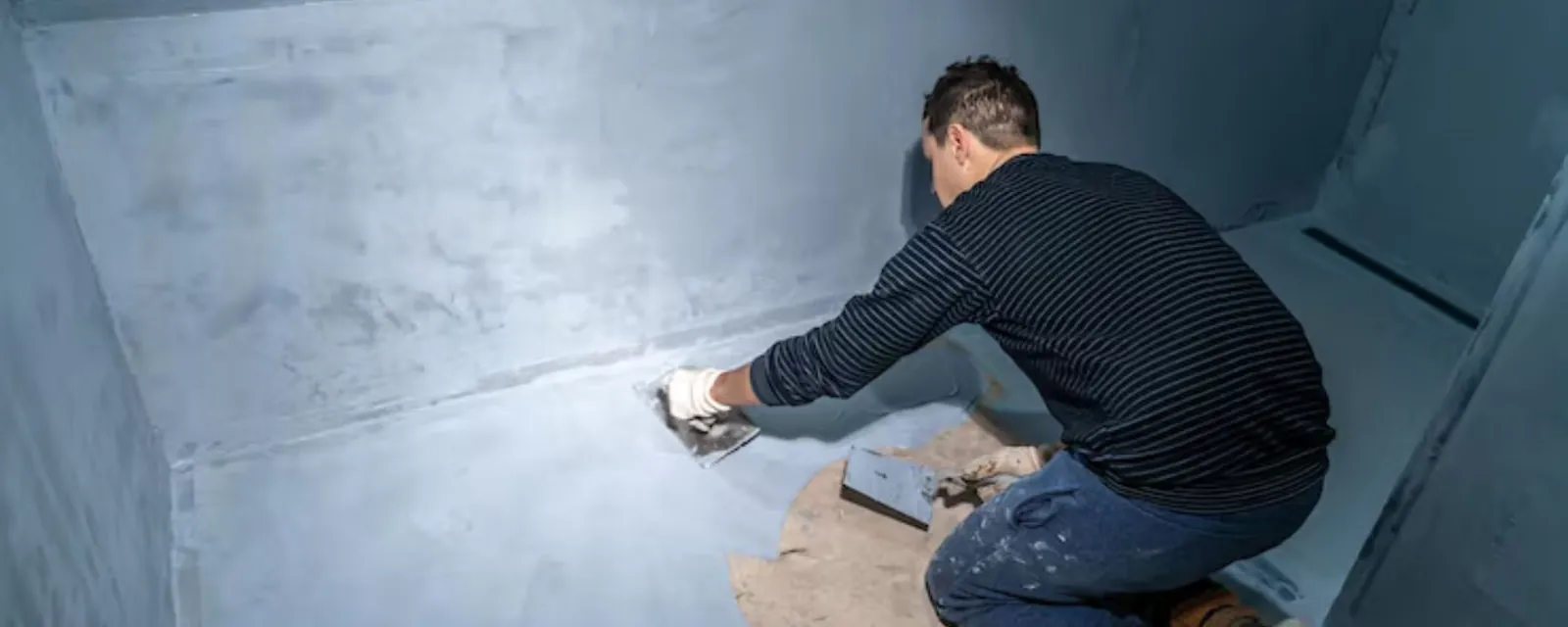
| Slight dampness, no puddles | Often | Waterproof paint on clean masonry |
| Water running through the wall after rain | No | Exterior drainage or membrane, interior drain |
| Water rising through the floor joint | No | Interior perimeter drain and sump pump |
| A single crack that leaks | Not reliably | Crack injection |
| A plumbing leak | No | Repair the pipe |
Guilford note: groundwater, floods and septic systems
NOAA's 1991 to 2020 climate normals show about 42 inches of annual precipitation at the coastal New Haven Tweed station and about 50 inches at inland Mount Carmel. In a wet year, the water table in coastal Guilford can rise, and the town's plan of conservation and development notes that rising water tables in areas with potential sea level rise can cause existing septic systems to fail.
Guilford's Engineering Department says its Special Flood Hazard Area includes FEMA zones A, AE and VE and that work there often needs a Flood Hazard Permit. A basement in a mapped zone is a place where paint will not be the answer. The health department says to keep sump pumps and footing drains away from the septic system, so any drain you add needs a safe outlet.
If you decide to use paint
These steps decide whether it lasts.
- Clean the wall. Remove old paint, efflorescence and loose material with a wire brush.
- Fix cracks and holes first. Hydraulic cement fills gaps and sets even when wet.
- Test for moisture. Do not coat a wall that is actively wet.
- Apply to the manufacturer's coat count and thickness. Thin coats fail.
- Keep downspouts and grading working. Roof water against the wall defeats any coating.
Why paint fails
Paint can only hold back water from the front. Groundwater pushes from behind with the force of the water table. That pressure finds the weakest spot and lifts the coating. If the wall looked fine for a season and then blistered, that is what happened. The second coat does not help.
A basement that actually leaks needs a way to give water somewhere to go. That means interior drains and a sump pump, or exterior drainage. Our sump pump service and basement waterproofing page explain the plumbing side.
When to bring in a pro instead
Call a professional if water runs along the floor after rain, if cracks widen, if a wall bows inward or if the floor stays wet in dry weather. Those are structural or drainage problems, not coating problems. A foundation contractor can address the wall, and a plumber can design the drain and pump side.
Ask each contractor what cause they believe is behind the water and how they know. A reasonable answer links the symptom to the source, and a warning that a coating is a short-term measure is a sign of an honest estimate.
Dampness checklist: what to look for and what it means
Walk the basement with this list before spending money.
| What you see | What it often means | Next move |
|---|---|---|
| White chalky powder on masonry | Efflorescence from moisture moving through the wall | Find and stop the source, then brush off |
| Dark stains low on the wall | Repeated wetting from groundwater or a leak | Test the wall, check drainage outside |
| A musty smell with no visible water | High humidity or hidden dampness | Dehumidify, check for hidden leaks |
| Peeling paint in sheets | Water pressure behind the coating | Remove the coating, treat the cause |
| Water at the floor and wall joint | Hydrostatic pressure at the footing | Interior drain and sump pump |
| Rust on the bottom of the water heater or furnace | Chronic moisture | Raise the equipment, reduce the moisture |
Humidity, mold and the basement air
A basement can feel damp without any water coming through the walls. Warm summer air meets cool concrete, moisture condenses and the room smells musty. A dehumidifier set to hold humidity around fifty percent solves many of those cases without any coating at all, and it helps protect stored items from mold.
If you see mold, find the moisture first. Cleaning mold off a wall that is still wet only buys a few weeks. Bleach does not reach inside porous material, and a wet wall regrows it. Fixing the water source, drying the area and then cleaning is the right order.
A realistic plan for a basement that stays damp
Fix the outside first. Extend downspouts several feet from the foundation, check that the soil slopes away from the house and clear gutters. These are the cheapest steps and they remove a lot of the water that reaches the wall. Then handle humidity with a dehumidifier. Only after that, judge what is left.
If dampness remains, the wall may take a masonry coating once it is dry and clean. If water still appears after rain, plan for drainage and a pump rather than another coat. A measured sequence beats a single big purchase, and each step tells you something about the cause.
Questions we hear on calls
Related products with different formulas. Paint is a thick coating, and a clear sealer soaks in. Neither stops water under pressure.
It can hide it. The white deposit is salts carried by moisture, and the moisture needs to be stopped at its source.
No. The paint will not stick, and it traps moisture.
Years on a dry-ish wall, months on a wall under pressure.
Yes. The Guilford Health Department says to keep sump pumps and footing drains away from the septic system, so any new drain needs a safe discharge.
Sources for the local details on this page
The local facts above come from the Guilford plan of conservation and development and Guilford Engineering Department flood hazard permit page. Rules and figures can change, so check with the town or state office before you rely on them for a permit or a purchase.